
Industries

Reducing Downtime in Agricultural Operations with Automated Control Systems

Advances in smart equipment and automated control systems are showing great promise in the agricultural sector. Farmers are now using agricultural automation for planting, irrigation, harvesting, processing, and much more. Automation can be fixed, programmable, flexible, or integrated with existing systems. The need for human intervention, and the degree to which it can be adapted,…

Control Panels

What is Industrial Cybersecurity?

The need for improved cybersecurity has been raised often in the past few years. According to the World Economic Forum (WEF), the manufacturing sector is the most targeted by cyberattacks. Industrial IoT, intellectual property (IP) theft, phishing, ransomware, and supply chain attacks are its main threats.  But security issues are a concern across the entire…

Control Panels

How To Choose The Right Terminal Block For Your Project

A terminal block is a modular, insulated block used in electrical connections to join wires. It is much more efficient, and safer, than taping wires together, and easier than soldering. However, these blocks vary in size, structure, and design. So, how do you choose the right terminal block for your project? There are several things…

Motors

What Are The Advantages of Solid State Relays?

There are two main types of relays in the industrial sector — electromechanical and solid-state. Both have their place in the industrial sector. But solid-state relays are gaining popularity in industrial applications where electromechanical relays have traditionally been used. So, what are solid-state relays and what advantages do they offer over other relay types? Our…

Motors

How To Troubleshoot Electric Motor Fluting

We rely on electric motors to power our machinery, but they are prone to various problems. One of these is electric motor fluting, particularly prevalent in large motors or when using Variable Frequency Drives. Fluting is accompanied by excessive heat, noise, and vibration, and is a sign that bearing failure, and ultimately motor failure, is…

Control Towers | Industries

Leveraging Cutting Edge Automation For Timber and Forestry Production

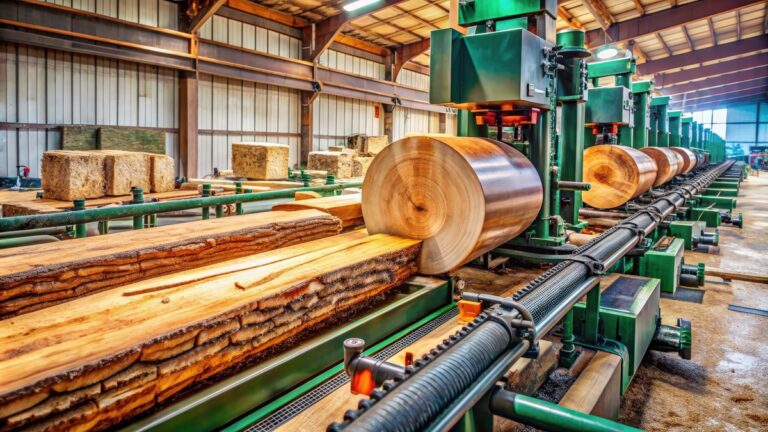
The US timber industry dates back to the pre-colonial period, and it has come a very long way since then. Like forestry and timber industries worldwide, it first relied on cumbersome and labor-intensive manual methods. But with the boom in automation across all sectors, the US lumber industry got a major boost. Greater safety and…

Control Panels | Operator Consoles

What Are The Common Types Of Panel Meters?

Industrial control panels allow you to monitor and control equipment, safely and even remotely with less human labor and risk. Panel meters allow you to monitor your equipment’s most critical parameters in real-time, for better control and simpler troubleshooting.  But what are the common types of industrial panel meters and what are their benefits? Find…

Control Towers

Electric Rock Crushers Explained: Features, Benefits, and Uses

Rock crusher machines and their aggregate products are very versatile and thus invaluable in many industries. Traditionally, diesel fuels powered these machines. But with the move to more environmentally friendly and sustainable options, electric crushers are now just as popular. What are the features, benefits, and uses of such equipment? And what are the advantages…

Control Panels

How Do Electro-Pneumatic Control Systems Work?

Electro-pneumatic control systems are widely used in the industrial sector. These control systems can operate heavy machinery, assembly lines, sorting equipment, and automated packaging processes. They are the perfect combo of electrical and pneumatic power and they offer some distinct advantages. But what exactly are electro-pneumatic controls, and how do they work? In this guide…

Control Panels | Industries

How Automated Production Lines Reduce Waste

Automation has offered many benefits across all industries, but most especially in the industrial and manufacturing sectors. Incorporating automated processes has allowed businesses to get more done, faster, and with less human labor. This has, in turn, led to greater safety, as well as lower operational costs. Automation offers another significant benefit, too. It reduces…