Motors

How AEC Simplifies Selection and Supply for Choosing The Right Electric Motor

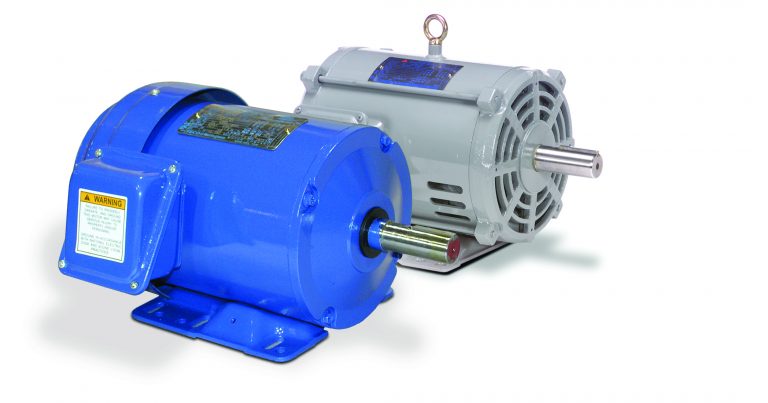
Choosing the right electrical motor for industrial use can make or break your operation. The right motor improves performance, reduces maintenance costs, and keeps systems running reliably. The wrong one can lead to wasted energy, unexpected downtime, and unnecessary expenses. For plant managers and maintenance teams, the challenge often lies in navigating technical specs and…

Control Panels

Redundancy in Control Systems: What It Looks Like and Why It Matters

When a production line stops unexpectedly, the costs add up fast. Lost product. Missed deadlines. Emergency repair calls. For facilities processing food, cutting timber, or moving aggregate materials, even a short outage can mean thousands in losses. Redundant control systems offer a practical solution. They keep operations running when components fail to prevent costly downtime….

Motors

Electric Motor Distributor Adds Value Beyond the Part Number

When a motor fails at 2am on the production floor, you need more than a catalog number. You need a partner who understands your application, can cross-reference parts, and knows how to get the right replacement up and running quickly. This is where a specialized electric motor distributor separates themselves from commodity suppliers. Automation Electric…

PLC Systems

Achieving Seamless Interoperability: OPC UA and Open Standards in Automation

Modern factories and plants are more connected than ever. Machines, sensors, and control systems all need to work together. But without a shared communication standard, the result is often siloed, inefficient, and costly. Open standards help to solve this issue. They give all systems a common language, making it easier for equipment to connect, share…

Control Panels

Implementing Advanced Process Control (APC) in Control Panel Design

The integration of Advanced Process Control (APC) into control panel design allows those in manufacturing and industry to optimize even the most complex systems. This integration is transforming modern automation, improving process stability, reducing variability, and maximizing efficiency.  This article explores the core components of APC, the benefits it brings to industrial operations, and the…

Control Panels

SCADA vs. DCS: Choose The Correct Control System For Your Needs

SCADA (Supervisory Control and Data Acquisition) and DCS (Distributed Control Systems) are two of the most widely used technologies in industrial automation. While both offer monitoring and control, they have different architectures, scopes, and focus. This affects their control capabilities, response times, flexibility, and scalability. SCADA vs. DCS: Which one is best for your industrial…

PLC Systems

Advanced PID Loop Tuning for Process Optimization in Food Automation

Proportional-integral-derivative (PID) control is a type of feedback controller that adjusts a system input according to the difference between a control variable and its desired value. However, PID controllers often need to be tuned to achieve optimal performance. This is why loop tuning is so crucial in industrial automation control systems, including those in the…

Control Panels

Designing Energy-Efficient Motor Control Panels for the Forestry Industry

In recent years, the industrial sector has had to face its responsibility towards the environment. There is a growing focus on sustainable materials and practices, particularly, energy efficiency. And no industry feels this responsibility more keenly than the forestry industry. Join us as we examine the reasons why energy efficiency is so important to the…

Control Panels | Industries

The Benefits of Custom Built Motor Control Panels for the Forestry Industry

There’s no stopping the forward march of industrial technology and innovation. In particular the forestry industry is experiencing greater precision, higher productivity, and more cost-efficiency, thanks to automation. And behind it all, you’ll find the motor control panel. A custom-built motor control panel is essential to incorporate new trends in forestry automation. But it is…

Industries

Reducing Downtime in Agricultural Operations with Automated Control Systems

Advances in smart equipment and automated control systems are showing great promise in the agricultural sector. Farmers are now using agricultural automation for planting, irrigation, harvesting, processing, and much more. Automation can be fixed, programmable, flexible, or integrated with existing systems. The need for human intervention, and the degree to which it can be adapted,…