
PLC Systems

Industrial Network Switch Strategy for PLC Networks

Modern automation systems depend on reliable communication between controllers, drives, remote I/O, and operator interfaces. As more devices are added, the network switch strategy becomes just as critical as the PLC program itself. Many systems begin with unmanaged switches because they are simple and inexpensive. In smaller applications, they often perform well. As systems expand,…

PLC Systems

Automation Firmware Management Strategy for Industrial Plants

Most industrial automation systems run reliably for years without major software changes. The challenge appears when hardware fails or when equipment must be upgraded. At that moment firmware suddenly becomes a critical issue. A replacement controller may arrive with a newer firmware revision than the one running in production. An HMI may not communicate with…

PLC Systems

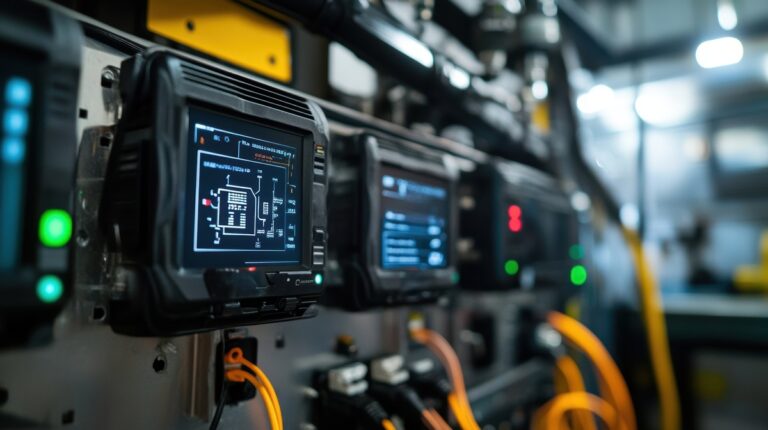
How to Monitor PLC Performance in Real Time

Why Real-Time PLC Performance Monitoring Matters for Uptime and Safety Most production problems do not start with a hard failure. They show up as longer scan times, delayed network responses, intermittent I/O faults, or nuisance alarms that operators learn to ignore. Without visibility into what the PLC is actually doing, those signals are easy to…

PLC Systems

Achieving Seamless Interoperability: OPC UA and Open Standards in Automation

Modern factories and plants are more connected than ever. Machines, sensors, and control systems all need to work together. But without a shared communication standard, the result is often siloed, inefficient, and costly. Open standards help to solve this issue. They give all systems a common language, making it easier for equipment to connect, share…

PLC Systems

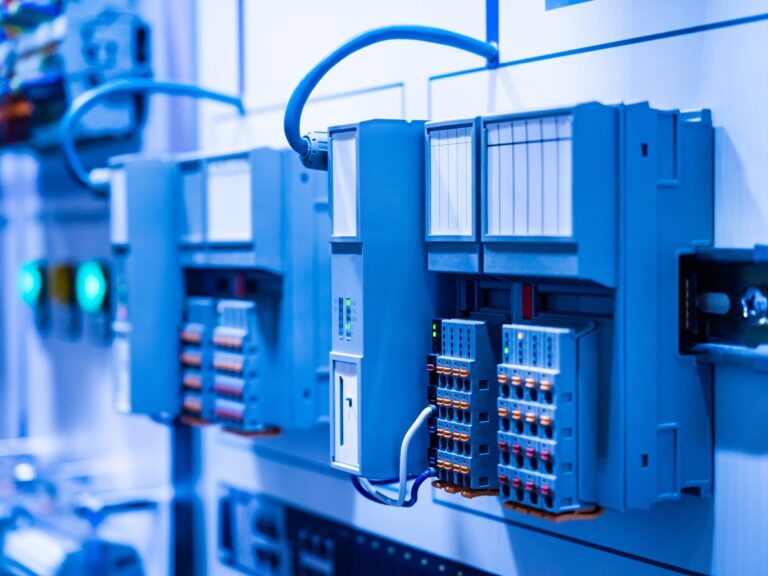
PLC vs. Relay-Based Control Systems: Making the Right Choice for Industrial Applications

Hard-wired logic has been widely used in the industrial sector for many years, and can still be a good choice. Many industrial businesses have switched to programmable logic controllers (PLCs) for their automation and control needs. But how do you know which is best for your business? We compared PLCs vs relay-based control systems to…

PLC Systems

Redundant PLC Systems in Forestry and Aggregate Industries

Redundancy is a crucial factor in any industry. It ensures that backup systems are available in the case of system or component failure. This entails maintaining duplicated or even triplicated components or systems, for prompt and efficient disaster management. This is why understanding redundant PLC systems is so important. Understanding Redundancy Architectures: Hot Standby vs….

PLC Systems

Advanced PID Loop Tuning for Process Optimization in Food Automation

Proportional-integral-derivative (PID) control is a type of feedback controller that adjusts a system input according to the difference between a control variable and its desired value. However, PID controllers often need to be tuned to achieve optimal performance. This is why loop tuning is so crucial in industrial automation control systems, including those in the…

PLC Systems | Uncategorized

Improving Recycling & Sorting Management With PLC Controls

It’s no secret that Programmable Logic Computer (PLC) controls play a major role in the industrial and manufacturing sectors, monitoring and regulating equipment on the factory floor. But they’re just as essential to the recycling industry, answering the increased demand for precise separating and sorting. That’s the great thing about using custom PLC controls. Virtually…

PLC Systems

6 Most Important Reasons For Using PLC Controllers

Programmable Logic Computer (PLC) controllers have been at the forefront of the digitizing movement in manufacturing and other industries, for decades. Built for the demands of harsh environments, they relieved businesses of much of the burden of mechanical control and human labor. Despite the changes in industrial environments in recent years, PLC controllers are as…