Control Panels | Operator Consoles

Conveyor Control Systems Design for Aggregate and Forestry Operations
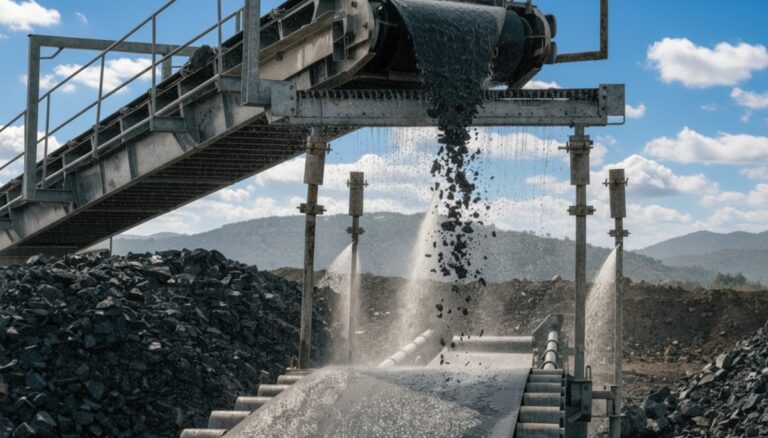
AEC has built conveyor control systems for crushing plants, sawmills, log yards, and material handling operations across the western United States and beyond. Conveyor systems move material through every stage of an aggregate or forestry operation. When they stop, production stops. In most cases, the issue is not the conveyor itself. It is how the…

PLC Systems

Automation Firmware Management Strategy for Industrial Plants

Most industrial automation systems run reliably for years without major software changes. The challenge appears when hardware fails or when equipment must be upgraded. At that moment firmware suddenly becomes a critical issue. A replacement controller may arrive with a newer firmware revision than the one running in production. An HMI may not communicate with…

Industries

When Power Gets Unreliable: Fixing Power Quality Problems in Industrial Plants

If you run a forestry operation, a food packaging plant, or operate an aggregate business, you have probably seen this pattern. The line runs fine most of the day. Then a drive trips. A control system resets. A transformer runs hotter than it used to. Someone swaps a component, things settle down for a while,…

Control Panels

Redundancy in Control Systems: What It Looks Like and Why It Matters

When a production line stops unexpectedly, the costs add up fast. Lost product. Missed deadlines. Emergency repair calls. For facilities processing food, cutting timber, or moving aggregate materials, even a short outage can mean thousands in losses. Redundant control systems offer a practical solution. They keep operations running when components fail to prevent costly downtime….

Motors

Electric Motor Distributor Adds Value Beyond the Part Number

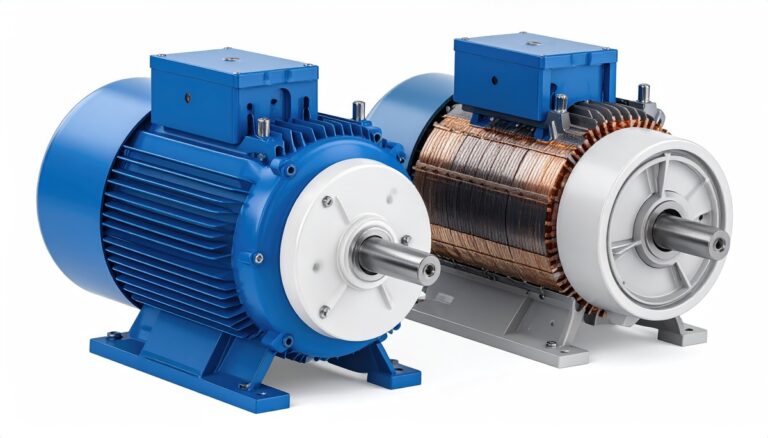
When a motor fails at 2am on the production floor, you need more than a catalog number. You need a partner who understands your application, can cross-reference parts, and knows how to get the right replacement up and running quickly. This is where a specialized electric motor distributor separates themselves from commodity suppliers. Automation Electric…

Control Panels | Control Towers

Convergence of OT and IT: Integrating Industrial Automation with Enterprise Systems

Modern industrial facilities face mounting pressure to optimize enterprise systems & operations while meeting strict compliance requirements. The solution lies in bridging two traditionally separate worlds: Information Technology (IT) and Operational Technology (OT). This convergence is becoming essential for staying competitive. When SCADA speaks to ERP, production data populates dashboards in seconds, and maintenance plans…

Industries

Embracing Industry 5.0: The Next Evolution of Industrial Automation

The industrial landscape is evolving once again. While industries have spent the last years implementing Industry 4.0 technologies like smart sensors, IoT connectivity, and data analytics, there’s a new model emerging – and it’s putting humans back at the center. Industry 5.0 is a shift toward collaborative manufacturing that combines the efficiency of advanced automation…

PLC Systems

PLC vs. Relay-Based Control Systems: Making the Right Choice for Industrial Applications

Hard-wired logic has been widely used in the industrial sector for many years, and can still be a good choice. Many industrial businesses have switched to programmable logic controllers (PLCs) for their automation and control needs. But how do you know which is best for your business? We compared PLCs vs relay-based control systems to…

Control Panels

SCADA vs. DCS: Choose The Correct Control System For Your Needs

SCADA (Supervisory Control and Data Acquisition) and DCS (Distributed Control Systems) are two of the most widely used technologies in industrial automation. While both offer monitoring and control, they have different architectures, scopes, and focus. This affects their control capabilities, response times, flexibility, and scalability. SCADA vs. DCS: Which one is best for your industrial…

PLC Systems

Advanced PID Loop Tuning for Process Optimization in Food Automation

Proportional-integral-derivative (PID) control is a type of feedback controller that adjusts a system input according to the difference between a control variable and its desired value. However, PID controllers often need to be tuned to achieve optimal performance. This is why loop tuning is so crucial in industrial automation control systems, including those in the…