Conveyor Control Systems Design for Aggregate and Forestry Operations
AEC has built conveyor control systems for crushing plants, sawmills, log yards, and material handling operations across the western United States and beyond. Conveyor systems move material through every stage of an aggregate or forestry operation. When they stop, production stops. In most cases, the issue is not the conveyor itself. It is how the system is controlled and sequenced.
Control System Role in Plant Performance
A conveyor control system governs how material flows across the plant. It manages startup and shutdown behavior, monitors system conditions, and coordinates equipment interaction. In well-designed systems, material moves continuously with minimal intervention. In poorly designed systems, operators compensate for sequencing issues, delayed shutdowns, and inconsistent responses to faults.
Common Conveyor Types and Control Considerations
Belt Conveyors
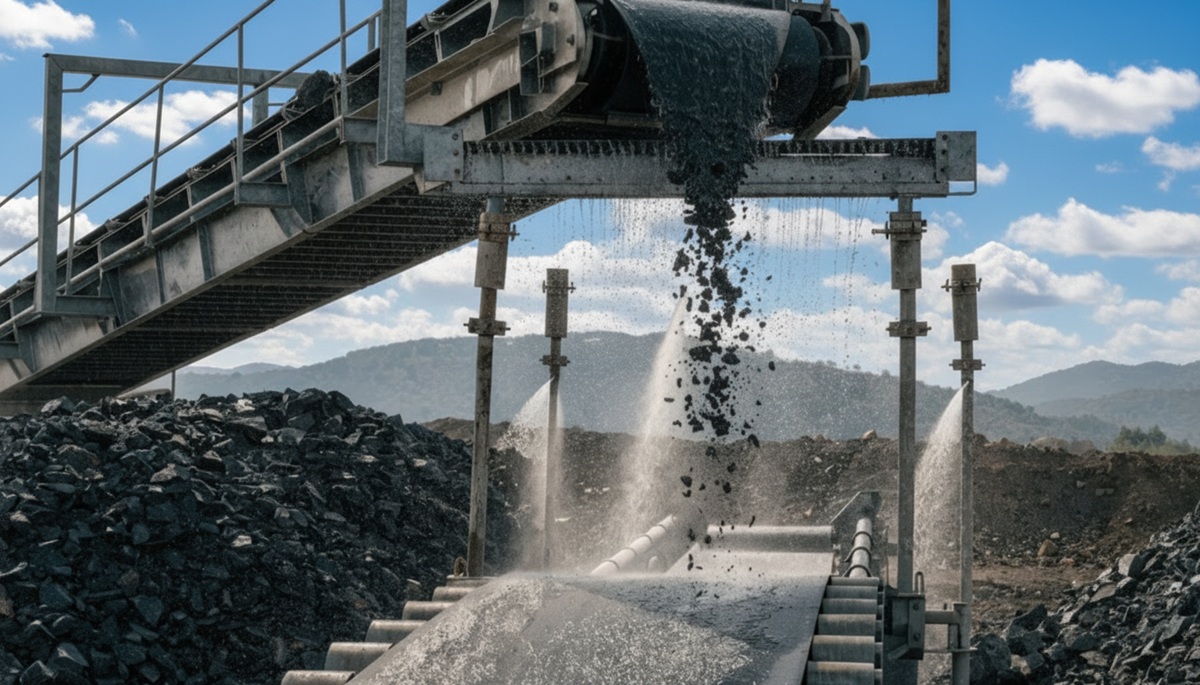
Belt conveyors are the most common type in both industries. The control system has to start the belt against load, monitor for slippage, and detect conditions like belt tracking off the rollers or broken
Screw Conveyors
Screw conveyors handle bulk material. The control has to detect motor overload quickly enough to stop the screw before something breaks.
Apron Feeders and Pan Conveyors
Apron feeders move heavy, abrasive material at low speed under high impact loads. They are common at the head of a crushing circuit where raw material gets dumped from haul trucks. The control system manages the feed rate to match the crusher’s intake capacity.
Starting and Stopping Conveyors
Starting a loaded conveyor is one of the most stressful events the equipment ever sees. The motor has to overcome the inertia of the belt, the rollers, and the material on the belt, all at once. If the start is too fast, belts can slip, drives can trip on overcurrent, and material can shift in ways that throw the belt off track.
Soft Starting
Soft starters and VFDs both ramp the motor up gradually. The choice between them depends on whether the conveyor needs variable speed during normal operation or just controlled starting. A primary feeder under a crusher usually benefits from variable speed because the operator wants to control the feed rate dynamically. A discharge belt at the end of a circuit usually only needs soft starting because it always runs at the same speed when it runs.
Sequenced Starting
Conveyors in a circuit have to start in reverse order from the material flow. The discharge belt starts first. The belt feeding the discharge starts second. The belt feeding that one starts third. Working backwards from the discharge prevents material from piling up on a stopped belt and creating a load that the next conveyor cannot start. Sequenced starting is built into the control logic with timers between each start signal, and the timers have to account for the slowest belt in the circuit reaching full speed before the next belt is allowed to start.
Sequenced Stopping
Stopping is the opposite. The belt furthest upstream stops first, and each downstream belt continues running long enough to clear the material that was on it. Without sequenced stopping, a normal shutdown leaves piles of material at the head end of every belt, which becomes a starting problem the next time. Emergency stops are different. An emergency stop has to stop everything immediately, regardless of what is on the belts, because the safety condition that triggered the stop trumps the operational concern.
Integration With Crushers and Processing Equipment
In aggregate plants, conveyor control systems must be integrated with crushers. When a crusher slows or stops, the feed conveyor must respond immediately. Effective systems monitor crusher load and adjust conveyor behavior in real time.
When the crusher gets choked or shuts down, the feed conveyor has to stop within seconds to prevent piling material into a stopped crusher. When the crusher restarts, the feed conveyor has to ramp up gradually to give the crusher time to clear what is already in it.
This coordination usually happens through a PLC that has visibility into both the crusher and the conveyor signals. The logic monitors crusher motor current, crusher level if level sensors are installed, and any choke detection sensors. The feed conveyor speed and on-off state respond to those signals. Tuning this logic for a specific plant is a process that takes time, and it is one of the things that makes a difference between a plant that runs at capacity and one that fights its own controls.
Forestry-Specific Control Requirements
Forestry operations handle individual pieces with varying sizes and destinations. Control systems must track position and spacing using sensors such as photoeyes and encoders. The control system has to monitor this without losing track of pieces during normal operation, and it has to recover gracefully when a jam or a short cycle disrupts the flow.
Mobile and Portable System Considerations
Mobile systems must handle vibration and changing site conditions. Control systems must be durable and usable in field environments while maintaining consistent sequencing and monitoring logic.
We have built a lot of mobile control systems, including the kind of crusher control trailers that move from site to site as a single unit. The panels live in heated, sealed enclosures inside the trailers. The design is different from a stationary plant, but the underlying principles, sequenced starting, protection, coordination, are the same.
Conclusion
Conveyor control systems are a core part of plant performance. Proper sequencing, early fault detection, and integration with processing equipment determine how efficient and productive the system operates.
What separates a good system from a bad one is whether the designer knew what conditions the equipment would actually face and built a system to operate in the conditions.
If you are designing or retrofitting a conveyor control system for an aggregate or forestry operation, we have done this work for a long time. Tell us what the plant looks like, what material is moving through it, and what problems you are trying to solve. We will help you put together a control system that handles the work without becoming a problem of its own.
Svend Svendsen is the principal owner and a certified electrical engineer at Automation Electric & Controls Inc. Svend has decades of panel building experience specializing in custom industrial control systems, motor control panels, operator consoles, automated control systems, and custom control trailers. Automation Electric and Controls Inc. is a licensed ETL 508A panel building shop.