
The Future of Automated Control Systems in Aggregate Industries
Aggregates have always played a crucial role in construction, and the demand for products like sand, gravel, and crushed stone continues to be high. In the U.S. alone, aggregate industries contribute $110 billion to the national economy annually.
Thanks to automated control systems integrated with the latest aggregate industry technology, production can keep up with rising demand. But how does automation incorporate emerging technologies? And what does the future of industrial automation hold? You’ll find the answers here.
Emerging Technologies in Industrial Automation for Aggregate Processing
As the world of industry entered the Fourth Industrial Revolution, technologies like the Internet of Things (IoT), robotics, and AI-powered processes are becoming commonplace. Industry 4.0 offers a new Smart way of doing things, interpreting real-time data for better business decisions.
This enables industrial businesses to remain relevant and competitive while optimizing their resources and boosting productivity. And aggregate processing companies cannot afford to ignore such emerging technologies.
Several trends are reshaping the face of industrial automation, particularly for aggregate processing.
How Automation is Transforming the Aggregate Industry
Cement and aggregate production entails multiple and diverse operations, from quarrying and mining to processing and even transportation to construction sites. And automation is supporting operations at every level, from optimizing quarrying and conveying equipment to scheduling maintenance and more.
Automation offers many benefits specific to the aggregate industry. Here are just a few examples of how automation is transforming the aggregate industry.
- Automated workflows save time and effort, from automatic start-up and shut-down of machinery to the automated loading of aggregate products into trucks.
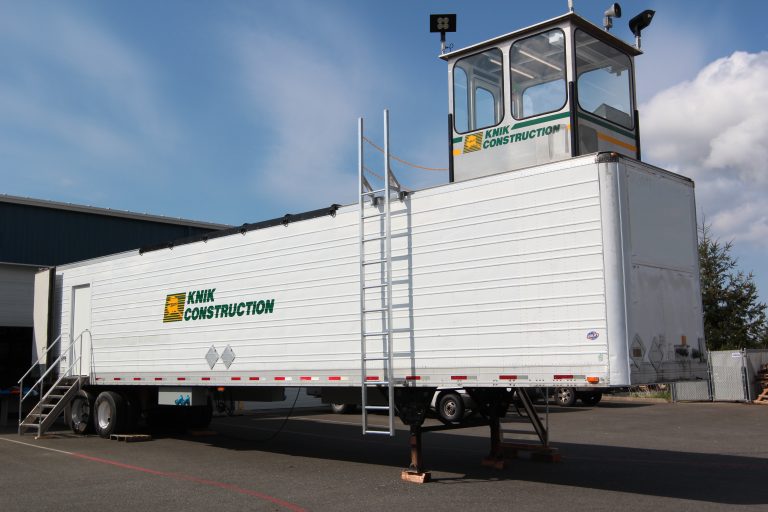
- It increases safety and reduces downtime, by decreasing reliance on manual labor in harsh environments, thus lowering the risk of accidents. Operations are controlled at a safe distance from custom-built trailers and operator cabs.
- Automation also offers more precision and accuracy, by controlling and optimizing crushing and screening processes.
- Automated conveyors enable streamlined handling and sorting of aggregate materials.
- With automated and digital tools, output is maximized to meet higher demands while reducing waste and emissions.
Best of all, when paired with the latest AI innovations, automation opens the door to even more streamlined operations. This is especially evident in the use of predictive maintenance.
Predictive Maintenance and the Role of Control Systems
The aggregate industry has always been plagued by wear and tear, damage, and equipment failure. Maintenance and repair have been a constant issue. Fortunately, predictive maintenance mitigates this costly problem.
Predictive maintenance takes maintenance from a reactive approach to a more proactive one. It focuses on monitoring the condition and performance of rock-crushing and screening equipment in real time and foresees any issue requiring maintenance before a breakdown can occur.
Predictive maintenance is now becoming the norm thanks to more advanced predictive analytics in automated control systems and more sophisticated algorithms.
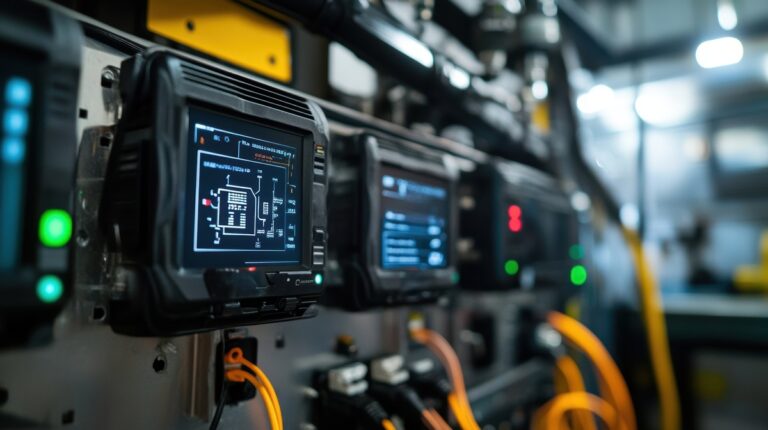
Sensor data on quarry machinery is constantly analyzed and interpreted to predict potential malfunctions. Conveyor belt data such as speed, tension, and vibration provide a continuous stream of information about productivity and efficiency and highlight where improvement is needed.
Moreover, maintenance can be scheduled for less critical times when maintenance work will not cause too much interruption. The optimal time for such maintenance can be determined through automated analysis of productivity and output.
The Future of Automation Technology for Aggregate Industries
As technology progresses, the many facets of Industry 4.0 will reach into more and more industries. This is especially true for the aggregate industry.
No longer merely a tool for increasing productivity or reducing the need for human labor, automation technology now offers so much more. The role of automation will continue to grow, encompassing ever more processes on the road to more efficient and sustainable aggregate production.
The need for more efficient yet sustainable quarrying, production, and use of natural resources has long been a hot topic. And emerging automated technologies will rise to the challenge.
Improvements in efficiency, safety, and maintenance will be driven by real-time data analytics and insights. This will ultimately lead to an aggregate industry primed for the rising demand for its products, as well as the increased demand for sustainability. A win-win situation, powered by automation.
Conclusion
The future of automated control systems in aggregate industries seems bright. As control systems become more advanced, thanks to new AI-powered innovations, the stage is set to ramp up production and enhance efficiency.
But to maximize the benefits of automated control systems in your aggregate business, you need robust, top-quality, certified control panels.
AEC is a licensed ETL/UL 508A panel builder with experience in industrial automated control for the aggregate industry. We also carry a wide range of parts and accessories for easy maintenance, and we service everything we manufacture or sell. Contact us for your automated control needs.
Svend Svendsen is the principal owner and a certified electrical engineer at Automation Electric & Controls Inc. Svend has decades of panel building experience specializing in custom industrial control systems, motor control panels, operator consoles, automated control systems, and custom control trailers. Automation Electric and Controls Inc. is a licensed ETL 508A panel building shop.