
Harnessing the Power of Data with Advanced Industrial Control Systems
When automation was first introduced to the industrial sector, it forever changed how we do business.
It soon became evident that automated industrial control was the key to efficiency, productivity, and a competitive edge. Since then, industrial automation has come a long way, embracing the increasingly digital age with the latest innovations in robotics, artificial intelligence, and data analytics.
But how do these modern industrial control systems work, and how can you maximize your data’s potential with them? Get the answers to these crucial questions in this short guide to harnessing the power of data with advanced industrial control systems.
How Industrial Control Systems Work
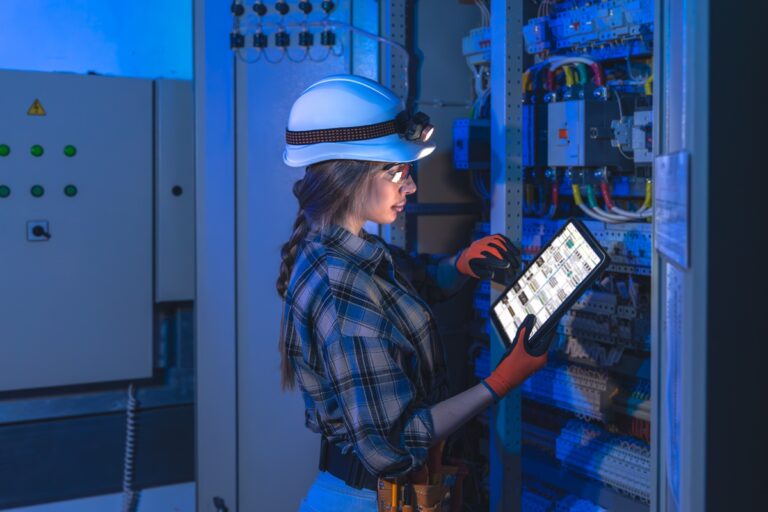
In a nutshell, an industrial control system is an integration of software with your hardware to monitor and control your industrial processes. It automates all the more repetitive tasks that you program it to control. All your manufacturing, line assembly, and processing tasks can be controlled in this way.
Types of Automation
There are four types of industrial automation systems: fixed, programmable, flexible, and integrated.
These systems offer varying levels of programmability. For example, fixed automation is adequate for specific tasks related to high-volume production of a single product. However, programmable and flexible systems are ideal for more complex and scalable operations.
An integrated automation system requires no human intervention to operate, as your machinery is all connected to and controlled by a central computer. This system is often accompanied by advanced robotics, artificial intelligence (AI), and machine learning (ML).
Industrial Control Choices
You have three choices of controller: a Programmable Logic Controller (PLC), a Programmable Automation Controller (PAC), and a Distributed Control System (DCS).
Your facility’s unique needs, plans for expansion or adoption of the Industrial Internet of Things (IIoT), will dictate your choice of industrial automation controller. But PACs are typically better suited for more complex control, robotics, data logging, and SCADA (Supervisory Control and Data Acquisition).
How to Leverage Data from Industrial Control Systems
So, how do you leverage the data from your chosen industrial control system?
Data Collection and Interpretation
Your facility’s needs will determine the type of automation control you use, and you may even use more than one. But whichever type you choose, you’ll have access to relevant operational data.
Your industrial control system collects data from sensors and connected devices on the production floor. This data can include information such as equipment status, flow rates, pressure, temperature, and other operational variables.
Data Storage and Analysis
This data is then stored in a centralized database for analysis. Any patterns and trends will be identified, and anomalies reported, allowing you to accurately assess your operational efficiency and troubleshoot problems.
Cloud-based monitoring allows you to upload data to the Cloud for storage and analysis. Although this offers distinct benefits, it’s not the only option. Edge computing lets you move your computing to the network’s edge, for localized, real-time decisions on-site.
Data Analytics and Reporting
Your raw data is useful, but for maximum value, it needs to be correctly analyzed. The data analytics that industrial control systems offer allows you to interpret the data and report to stakeholders in your business.
It also empowers you to make better business decisions, optimize resources, and scale your operations.
Predictive Analytics and Proactive Maintenance
Data analytics also allows for predictive analytics. This highlights potential issues before they can cause equipment failure, breakdowns, and costly downtime, and offers practical solutions.
By paying attention to these predictive analytics, you can be more proactive about maintenance, and head off disasters before they occur. This is also useful if you are planning to scale and expand your business.
IT Integration and Management
Ultimately, the data stored in your industrial control system can lead to data-driven decisions about the future of your operations. You can integrate this data with your other IT systems to facilitate better maintenance scheduling, worksite management, and resource planning.
By harnessing the power of data with advanced industrial control systems, you do more than just boost your manufacturing and production. With data constantly accessible in real-time, and even from remote locations, you also streamline your management process.
Conclusion
An industrial control system allows you to monitor, manage, and control your equipment.
But when it integrates with robotics to automate repetitive tasks, you save time and money, reduce waste, and mitigate the risk of human error and breakdown. And when it leverages AI-powered technology and data analytics, you can make data-driven decisions that enhance your operations.
AEC is a licensed ETL 508A panel building shop. We produce custom industrial control panels and sell the necessary components to keep your equipment running smoothly. We also service everything we make and sell. Contact us today for more information or a quote.
Svend Svendsen is the principal owner and a certified electrical engineer at Automation Electric & Controls Inc. Svend has decades of panel building experience specializing in custom industrial control systems, motor control panels, operator consoles, automated control systems, and custom control trailers. Automation Electric and Controls Inc. is a licensed ETL 508A panel building shop.