
PLC Programming and Ladder Logic For Industrial Controls
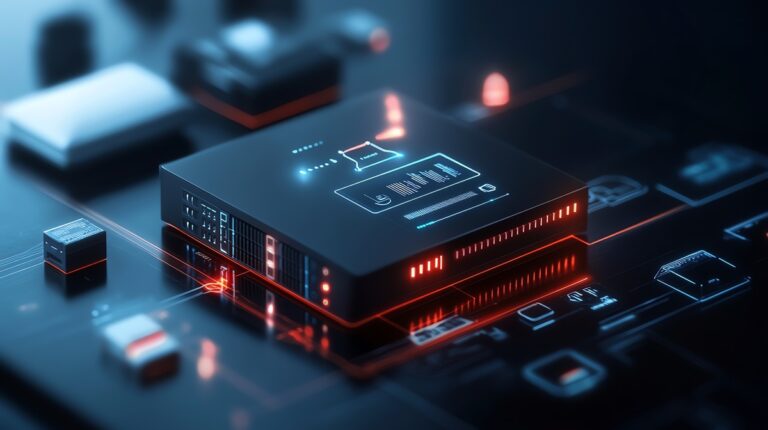
Programmable logic controllers (PLCs) and ladder logic are integral parts of industrial automation. They are designed to withstand harsh industrial environments and perform a variety of tasks based on their specific programming.
Their rugged construction and ability to withstand extreme temperatures, vibration, and dust make them ideal for use in industrial applications.
In this article, we will explore the basics of PLC programming and ladder logic. We will also look at some common applications for PLCs.
What Is PLC Programming?
PLC programming is the process of creating a program that will control how a machine or process functions. Programs are written in a particular language that provides instructions to the PLC as to what actions it should take under certain circumstances.
PLC programming is important in industrial settings as it automates complex processes and machinery. You can use it to control anything from a single machine in a factory to an entire production line.
PLCs were first introduced in the late 1960s. At that time, they replaced relay-based control panels. PLCs are now used in a wide variety of industries, including manufacturing, oil and gas, food and beverage, pharmaceuticals, and more.
How PLC Works
Each PLC system consists of several parts:
- CPU module: This is the brain of the system. It contains the microprocessor, memory, and input/output (I/O) ports.
- Power supply module: This module provides power to the system. PLC computer circuitry operates on a 5V DC power supply.
- Memory unit: This part stores the data from inputs as well as the program that the processor executes.
- Input/Output (I/O) module: This module connects the PLC with input and output devices. These can be digital or analog, depending on the system requirements.
- Communications module: This interface sends and receives to and from remote PLCs.
Types of PLCs
Compact PLC
A compact PLC is a small, modular PLC that is designed for use in space-constrained applications. They are often used in small-scale industrial applications, such as machine control or process monitoring.
Modular PLC
A modular PLC is a larger PLC that consists of different modules that you can add or remove as needed. This type of PLC is suitable for large-scale industrial applications, such as factory automation or process control.
What Is Ladder Logic?
Ladder logic is a programming language. It was originally developed for use with programmable logic controllers (PLCs). In ladder logic diagrams, each rung of the ladder represents a set of instructions that are executed in sequence.
It is used to develop software for PLCs that control industrial machines and processes. The language is based on the principles of Boolean logic, creating logical relationships between symbols.
Ladder logic is a graphical representation of boolean equations and is therefore easy for non-programmers to understand. The name ladder logic comes from the fact that the diagrams resemble ladders, with rungs connecting two vertical rails. Each rung on the ladder represents a different instruction or action that the PLC will take.
It is a very powerful tool for industrial controls, as it can perform complex sequences and control multiple devices simultaneously. It is also relatively easy to learn and use, making it a popular choice for many industrial applications.
Using PLC Programming & Ladder Logic For Industrial Controls
PLC and Ladder Logic are used in a wide range of industrial applications. Here are some examples of industries that commonly use PLCs for their operations.
The Glass Industry
PLCs and ladder logic are used extensively in the glass industry. PLCs control the various stages of glass production, including furnace temperature, batch mixing, and forming. Glass manufacturers can also use PLCs to monitor and optimize the production process.
Forest Industry
The forest industry also commonly uses PLCs and ladder logic. These controllers operate the different machinery and equipment that make paper. The PLCs are programmed to tell the machines what to do. They control the speed of the conveyor belts, the temperature of the ovens, and the amount of water that goes into the pulp.
Aggregate Manufacturing
The aggregate industry relies heavily on industrial controls to run its operations. Process control engineers use PLCs to automate the production process. They program the PLCs to perform tasks such as starting and stopping the machinery, controlling the speed of the conveyor belts, and opening and closing the valves.
Food Processing
PLCs and ladder logic are used extensively in the food processing industry. They automate the production process, from raw material handling to packaging and labeling.
Final Thoughts
PLCs play a vital role in many industries. They help to automate processes and keep production lines running smoothly. Additionally, PLCs help to improve the safety of workers by reducing the need for them to be in close proximity to dangerous machinery. If you are looking for a way to automate your industrial process, then consider using PLCs and ladder logic. Their flexibility and ease of use make them a great choice for many applications.
Svend Svendsen is the principal owner and a certified electrical engineer at Automation Electric & Controls Inc. Svend has decades of panel building experience specializing in custom industrial control systems, motor control panels, operator consoles, automated control systems, and custom control trailers. Automation Electric and Controls Inc. is a licensed ETL 508A panel building shop.