What Are Industrial Motor Controls?
If you have seen inside a factory or a manufacturing facility, you may have wondered what equipment was running. Could it have been electric motors? What about a complete conveyor system? There are many options that can be running simultaneously, but they all share common background controls. If you’ve never peeked behind the curtain of your favorite products and brands, we’ll give you a sneak peek at what industrial motor controls they use to make your favorite products.
What are Industrial Motor Controls?
Electric motors are a key piece of equipment that keep business moving forward. They simply convert an electrical energy into motion, but how, when, and why they operate can play a larger role into how a business operates overall. They account for a large percentage of a business’ power demand, so conservation of power and efficient operation is key to restrict wasteful usage. In order to keep power demand at a minimum, but still operate the business efficiently, industrial motor controls are employed to control the overall electrical system.
Motion can be a broad subject to discuss. When applied to electric motors, motion can consist of starting, stopping, acceleration, deceleration, and reversal. All of these actions need a governing input, which is where the industrial motor controls come in.
What Components Do Industrial Motor Controls Use?
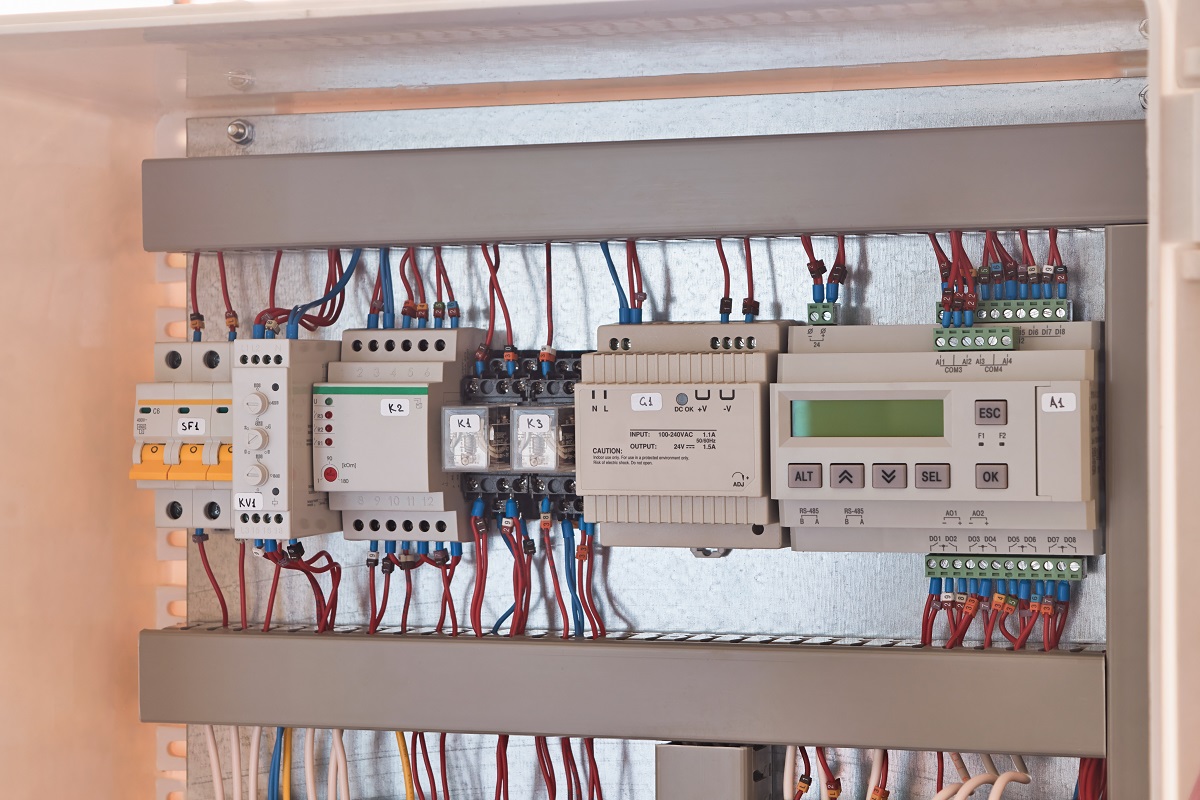
- Contactors and Switches – An electric contactor is a large relay for switching electrical loads on and off in motors and other high-power loads. Many varieties are available and can be tailored for the individual system and/or application. Switches come in many options from disconnecting power, limit switches to prevent excess motion, and special switches for specific applications.
- Circuit Breakers – Circuit breakers interrupt current flow to the electrical motor in the event of a fault to protect devices from electrical damage. Multiple options are available to serve high power industrial and commercial applications.
- Relays/Timers – Relays are used when a machine or engine must control a circuit using a lower power signal, or when several circuits must be controlled using one uniform signal to keep electrical equipment running smoothly. Timers are used in numerous electronic devices to control a wide variety of resistive and inductive loads.
- Various Enclosures – We offer NEMA rated electrical enclosures of various dimensions and styles. Enclosure options very from powder coated mild steel or stainless steel to non-metallic fiberglass reinforced polyester or polycarbonate construction. Our UL panel shop can review your specific needs and custom design the best option with you.
- Push Buttons – Operator Interfaces, push buttons and pilot lights provide machinery control and status indication. Variety of push buttons, switches, and specialty operators are used for individuals to operate and regulate control stations and equipment.
- Resistors, Transformers, and Capacitors – These components control, limit, and store power to reduce demand on the electrical system. There are many options available for appropriate sizing based on the application, and they can be used in combination for specific system requirements.
- Soft-starts – A Soft Starter is a device that limits the electrical current entering an A/C motor at start-up. Large electric motors require a high amount of electric current to start spinning, and that increases demand on the electrical system. The Soft Starter limits the electrical demand to slowly start the electric motor. The slower starting of “inrush current” prevents potential damage and reduces heat and stress on the electrical motor, its internal shaft, and other components.
- Variable Frequency Drives (VFDs) – A Variable Frequency Drive controls the speed of an A/C electric motor. It can vary the speed of the motor and also change the speed at which the motor increases and decreases at start up or shut off to limit electric demand.
What Benefits Do Industrial Motor Controls Offer?
Industrial motor controls can unlock many opportunities for a business. If you haven’t considered adding or upgrading your current controls, you may be missing opportunities. Small or large businesses can benefit from better controls, and here are some ways that motor controls may help reduce your costs and offer more benefits to your employees in the future:
- Reducing Energy Use and Associated Costs – Industrial motor controls can offer a long-term payback in reduced energy usage and associated costs with energy reduction. Your electric power bill may show two different billing rates: power use and demand. Motor controls can reduce the overall use by allowing certain pieces of equipment to only be used as needed. Controls can also reduce the demand of starting multiple pieces of equipment with electric motors concurrently. By strategically staggering start-up, electrical demand charges can be reduced.
- Hands-Free Wireless Options – Current motor controls can be interfaced with many wireless technologies and automated systems to offer remote monitoring and control. Using your smart phone or other hand-held device you can monitor, record, and adjust settings of your motor controls remotely. The internet has made remote viewing and control easy to do, and it doesn’t require a high-priced control system and software to accomplish.
- Endless Customization – Automated control systems can be combined with industrial motor controls to offer endless customization and control structure to fit any sized business. All components can be configured to run completely autonomous in the background of your daily operations or can require specific monitoring and hands-on adjustment by qualified personnel.
- More Process Consistency – Consistency in your processes can lead to huge gains in profit and efficiency without excessive associated downtime. It can also offer more safety for personnel as equipment operates as expected.
If your work environment can benefit from these opportunities, industrial motor controls can offer the flexibility and control to keep business running smoothly. We can design and build custom control systems that integrate with Motor Control Centers or Operator Controls for a complete cost-effective solution.
Automation Electric & Controls can help design and build your next custom Industrial Motor Control system to reduce limiting factors that prevent optimum results. AEC is a licensed ETL 508A panel building shop, and we specialize in control systems and motor controls that assist businesses to run at their best. Our work is defined by the quality products we produce. We offer consulting services, are locally owned in the Pacific Northwest, and stock a large inventory of products to keep your business running. When you’re ready for a new custom designed control system, a custom mobile trailer and container, or simply need support and consultation of a future concept, give us a call at (866) 452-6947 or email us at sales@automationelectric.com.
Svend Svendsen is the principal owner and a certified electrical engineer at Automation Electric & Controls Inc. Svend has decades of panel building experience specializing in custom industrial control systems, motor control panels, operator consoles, automated control systems, and custom control trailers. Automation Electric and Controls Inc. is a licensed ETL 508A panel building shop.


