
How Automation Controls is Changing the Food Processing Industry
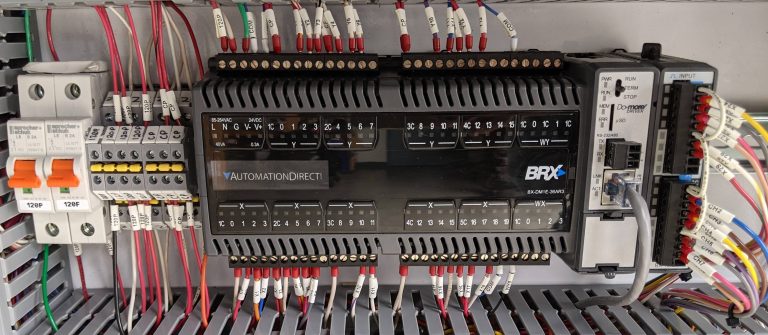
Most of the food related products that you can buy at a local store come from a manufacturing facility that processes food. These facilities may simply mix ingredients before packaging, while others completely make a unique product from raw ingredients through a cooked and packaged product. The goal is safe products that can be shipped to your local store for purchase. With the volume needed for current food processing, automation controls are becoming the standard to offer safe products with minimum recalls, increase productivity, and keep workplace safety at a high level. These are the ways controls are changing the food processing industry:
What Are Benefits of Automation Controls In Food Processing?
Automation Controls can be used for many different applications in the food processing industry. Most would think they are replacing labor to reduce cost, but automation and control hardware and software can do much more than just reduce headcount. These are just some of the ingenious ways controls are being used:
- Waste Reduction – Waste can come in many forms in a food processing environment. Improper handling of materials may cause waste if anything must be disposed of to ensure safety. Waste also comes in the form of poor time management. Controls can reduce confusion in the workplace with user friendly interfaces and easy access to programming.
- Avoiding Product Recalls – Recalling product from distribution centers and customers is expensive, and it damages a company’s reputation. Controls can use barcodes to track raw ingredients in the processing facility, plus store that information for later use if the final product must be investigated. Date, time, and employee information are just a few items that can be stored for product information. Every piece of data can be stored with cloud-based technology, and be accessible from anywhere in the world via connected devices. A smart phone or tablet with an internet connection can review product information at all levels.
- Increasing Productivity – The goal with food processing is to create a high-speed production line with built in capability and flexibility. Automation controls can incorporate shape recognition, label creation and reading, plus detect color gradients to judge quality. All of these features can add speed to a production line without extra labor to handle every function.
- Eliminating Human Error – Controls can work with sensors and scanners that can read barcodes for precise inspections with complete character recognition. They can also count numbers to ensure only the correct amount of final product is packaged. Eliminating errors increase reliability and quality for your end-customer.
- Return on Investment (ROI) – There are many ways automation controls can have a return on investment. Labor reduction, increasing quality, reducing waste, and reducing the amount of controls needed are just a handful of the ideas. One controller can manage a complete system, which can reduce complexity and investment requirements.
- Enhancing Company Reputation and Customer Satisfaction – Reputation and satisfaction can be hard to precisely quantify in numbers, but increasing or decreasing is easier to understand. Automation can improve product quality to reduce recalls and offer customers a better product. Company reputation can also be connected with workplace safety. Controls can offer better workplace safety and reduce the risk of injury by controlling machinery. Controls can be a part of a comprehensive workplace training program.
The food processing industry started with intense human interaction at every step of the process. Automation and controls have improved the food processing industry through cloud-based technological opportunities with next-level business solutions. These examples we’ve shared are just the tip of the iceberg in world-class solutions, and Automation Electric and Controls can support each to ensure your business runs at optimum performance. If it can be measured, it can be controlled. AEC is a licensed ETL 508A panel building shop, and our work is defined by quality, safety, security, and flexibility. We can support your business with enclosures, breakers, motors, wiring, relays, contactors, and cloud-based solutions to monitor your software and hardware. We are locally owned and have operated in the Pacific Northwest since 2003. We have provided products for companies both local and global. When you’re ready for a new custom designed industrial panel, a custom mobile trailer or container, or the next evolution in cloud-based solutions, give us a call at (360) 428-0201 or email us at sales@automationelectric.com.
Svend Svendsen is the principal owner and a certified electrical engineer at Automation Electric & Controls Inc. Svend has decades of panel building experience specializing in custom industrial control systems, motor control panels, operator consoles, automated control systems, and custom control trailers. Automation Electric and Controls Inc. is a licensed ETL 508A panel building shop.