
Applying PLC Controls To Industrial Equipment
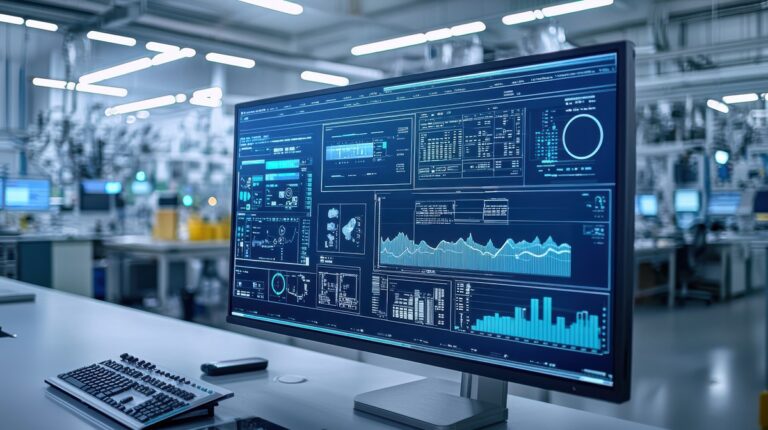
A programmable logic controller (PLC) is an industrial controller that has been modified for the control of various manufacturing processes. These include any industrial activity for which high easy programming, high reliability, and fault diagnosis would be an advantage.
Used extensively across several industries such as food processing, forest products, power plants, and more, PLCs offer several distinct benefits to all of these sectors. Understanding the efficiency improvements, reduction of labor costs, and minimization of human error that PLCs offer is crucial to any manufacturer.
In this article we look at the four main ways in which applying PLC controls to your industrial equipment will benefit your industry.
How PLCs Can Improve Industrial Equipment
Alongside Programmable Automation Controllers (PACs), PLCs offer several advantages in the manufacturing environment. These are the top four benefits:
Automate Operations
Programmable Logic Controllers enable the remote operation of machines. With the benefit of ladder logic, PLCs are essential in industrial automation. PLCs come in many shapes and sizes, and some are more complex than others. As a rule, the components of a PLC can be divided into:
- Power supply and rack
- A central processing unit (CPU)
- Input / output (I/O)
Both analog and digital input /outputs can be connected to any PLC. The Central Processing Unit contains the customized user program that regulates the PLC. And the PLC in turn controls other computerized equipment, machines, and robotics on site. This reduces the need for human input.
In the recycling industry, for example, these controllers allow the separation, conveyance, and sorting of the different materials to be recycled. Advanced PLC programming can detect and classify different materials, enabling recycling plants to be run fully remotely.
Remote Monitoring
PLCs also allow for safer, faster, and more accurate completion of tasks. They are ideal for industries that cannot allow for the risk of human error or that have more dangerous operations or equipment.
The latest generation of PLCs can remotely monitor and control input/output thanks to an integrated Ethernet port. This allows the remote controlling of machines by transmitting messages between electronic devices via Ethernet/IP or Modbus TCP.
The advantage of remote monitoring lessens the need for an extensive workforce of supervisors to oversee the running of these machines. However, you can pair PLCs with a Human Machine Interface (HMI). This enables users to monitor the health of the system and manually override controls when necessary.
Gathering Data
Data gathering is another advantage of a PLC. It receives information from connected sensors and input devices, processes this data, and initiates outputs based on pre-programmed instructions. It can control actuators and valves and other actions based on this data. This is all done with great speed and accuracy.
The glass industry is a good example here. Glass manufacturing relies heavily on the data gathering capabilities and advanced quality control afforded by PLC technology when paired with a Distributed Control System (DCS). PLCs help to manage the material ratios needed in the glass production process.
Of course, in any industrial environment, things can go wrong. PLCs with HMI systems will quickly pinpoint potential problems on-site. This reduces time spent on performing system diagnostics.
Integrate Systems
With a PLC, all systems can be fully integrated. It does so by bringing together the component sub-systems so that they function together seamlessly as one cohesive system. This means that your systems can operate with minimal manpower. As such, PLCs are perfect to use in environments that would be hazardous to humans.
Even the simplest of systems can benefit from PLCs. An example is the activation of a fire alarm. The integration of a PLC device can trigger an alarm to sound after a particular time delay. The fire alarm switch would be the input and the PLC output would then trigger the alarm at the appointed time.
PLC systems are modular, meaning you can mix and match the types of input/output devices to suit your needs. They allow your operations to scale up in size with ease. You can add additional PLCs as your system becomes more complex. This flexibility is a key reason why PLCs are one of the biggest trends in manufacturing industries.
Conclusion
The benefits of PLC controls for industrial equipment are clear. The idea of a computer with a single microprocessor and no keyboard, mouse, or monitor may seem limited. But a PLC can run your most complex industrial processes in extremely harsh environments with great efficiency. Ultimately, this helps to automate and speed up various operations. As a result, you can improve efficiency while reducing manpower, which in turn, boosts your bottom line.
Contact us today for the best advice and assistance for all your automation and control needs.
Svend Svendsen is the principal owner and a certified electrical engineer at Automation Electric & Controls Inc. Svend has decades of panel building experience specializing in custom industrial control systems, motor control panels, operator consoles, automated control systems, and custom control trailers. Automation Electric and Controls Inc. is a licensed ETL 508A panel building shop.