Standard Components vs. Customer-Specified Components in Industrial Control Panels
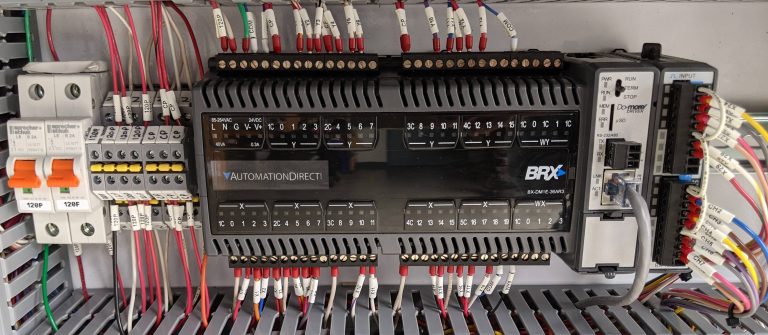
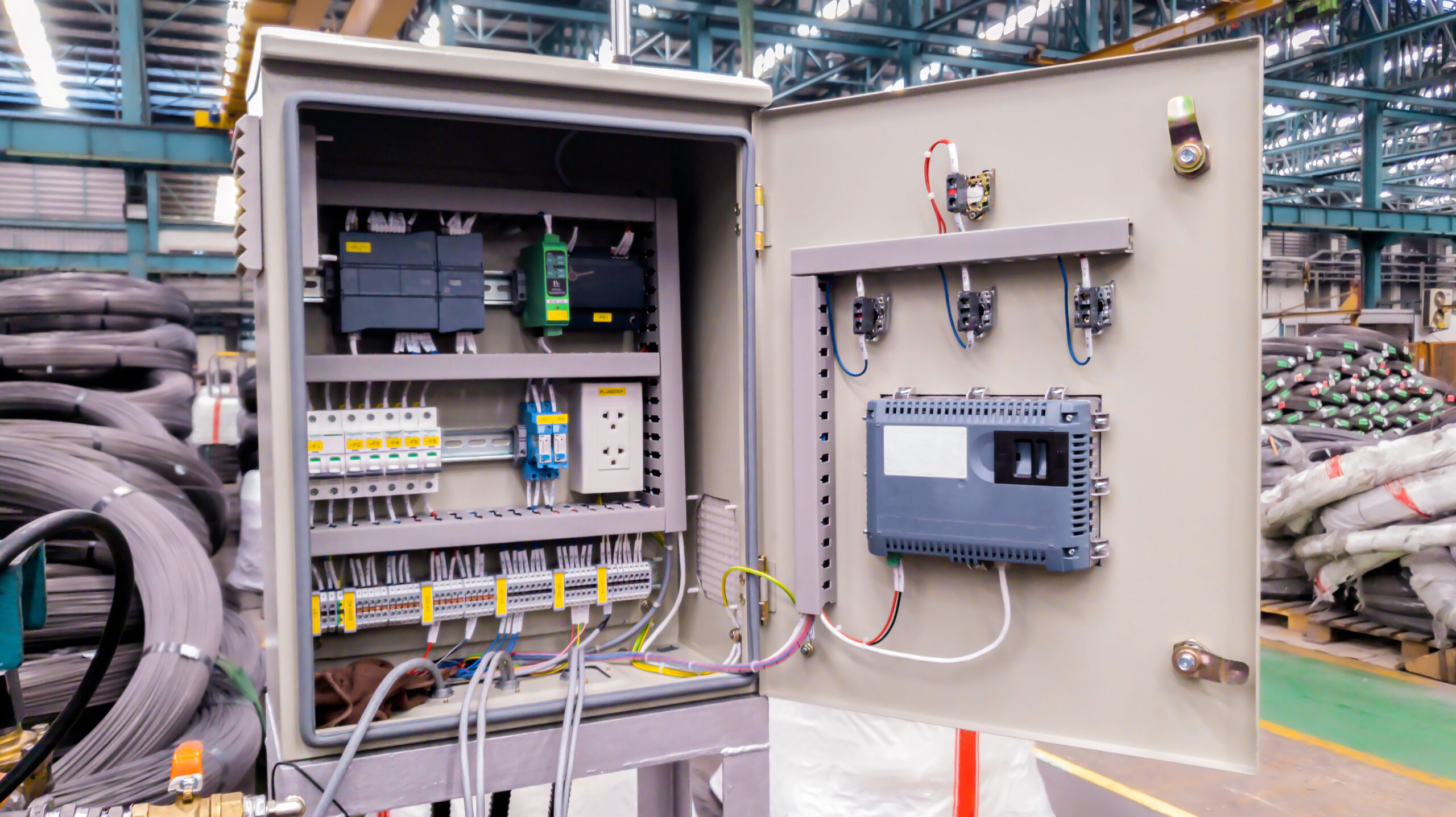
A motor starter, PLC, VFD, power supply, or circuit breaker may have several technically acceptable options. That does not mean those options are interchangeable from the customer’s point of view. A plant that has standardized on one product family may already stock replacements, own the programming software and train technicians.
On another project, the customer may have no established standards and may prefer the panel builder to select proven components based on the application, availability, compliance requirements, and serviceability. Both approaches can work.
AEC’s Custom Control Panel Checklist asks customers to identify preferred manufacturers and whether equivalent substitutions are acceptable before a panel is quoted. That information instructs design, procurement, programming, and long-term support.
Component Standards Solve Maintenance Problems Before They Happen
Many facilities standardize components because consistency makes maintenance easier. If every production area uses the same family of PLCs, technicians do not need several programming packages or a shelf full of different communication cables. If VFDs are standardized, maintenance can stock fewer spares and become familiar with one parameter structure and fault history system.
The same logic applies to contactors, overload relays, breakers, power supplies, relays, terminal blocks, and operator devices. Standardization reduces the number of unfamiliar parts a technician encounters during a breakdown.
AEC’s Motor Control Panel Components Explained article describes the role of many of these devices inside a panel. The component may be small relative to the complete system, but the wrong selection can make replacement, troubleshooting, or expansion harder than it needs to be.
When Customer-Specified Components Should Drive the Design
A customer specification should usually take priority when it reflects an established plant standard or an operating requirement. Existing spare-parts inventory is a good example. Requiring a specific contactor family may cost slightly more on the original panel but avoid carrying another line of replacement parts.
A facility that supports one PLC family may have licensed software, documented code standards, and trained technicians, around that hardware. Introducing another controller because it is less expensive can add support costs.
Customer standards may also be tied to environmental requirements, corporate electrical standards, cybersecurity practices, or compatibility with existing machinery. In those cases, the brand or product family is part of the operating system of the plant.
Where Equivalent Components Can Make Sense
A new standalone machine or a customer without established standards may benefit from allowing approved equivalents.
That flexibility gives the panel builder room to select components that meet the electrical and functional requirements. It can also help when a specified part has a long lead time or has reached the end of its product life.
AEC stocks and sources motors, drives, soft starters, motor components, breakers, and control accessories through its Parts & Components business. That broader parts experience can be useful when an equivalent is needed, but an equivalent should still be evaluated in the context of the complete panel rather than matched only by voltage and amperage.
Software and Programming Access Can Outweigh Purchase Price
Electronic devices have support requirements that mechanical substitutions do not. A replacement PLC, HMI, VFD, or managed switch may require different software, firmware, cables or network configuration.
A VFD is a good example. Two drives may both control the same horsepower motor, but the way they are commissioned may be completely different. A facility that already uses one drive family may have spare units on the shelf and technicians who know exactly where to look when a fault occurs.
AEC’s VFDs & Soft Starts resource shows the range of drive and starter options available for industrial applications. Selection should consider the motor and process first, then the maintenance and support requirements that come with the device.
Availability Matters, but Substitutions Need Discipline
Lead time is a legitimate engineering constraint. A component that meets every technical preference but cannot arrive until after the required startup date may force the project team to consider an alternative.
The right response is not uncontrolled substitution. The proposed replacement should be checked against the electrical ratings, physical layout, heat load, wiring requirements, communication protocol, software requirements, environmental rating, and any customer standard it affects.
For a panel already in production, even a physically larger breaker or power supply can create layout and wire-routing changes. That is why substitutions should be documented and approved before the shop drawings and bill of materials are released. AEC’s Reviewing Control Panel Shop Drawings Before Production Begins article explains why the drawings, layout, I/O, and bill of materials need to be reviewed as one system.
Component Changes Can Affect SCCR and Panel Compliance
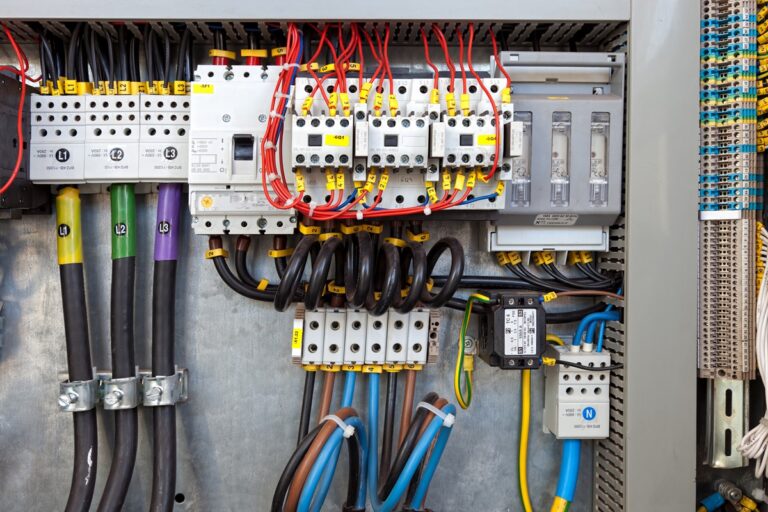
A replacement component can be electrically functional and still be wrong for a listed or certified panel. Industrial control panel components have ratings and conditions of use that have to fit the application. Changing a breaker, contactor, power distribution block, or motor-control combination can also change the short-circuit rating of the assembly.
AEC’s Power Distribution Inside an Industrial Control Panel article shows how protective devices, branch circuits, control power, drives, and distribution components work together. Changing one of those devices can affect more than the branch where it is installed.
The same applies to SCCR. A component with a lower short-circuit rating may become the limiting element in the panel. The Understanding Short Circuit Current Rating (SCCR) on Industrial Control Panels article explains why the rating has to be considered as part of the complete power architecture.
Standardization Should Match the Facility, Not a Brand Catalog
There is a point where too much standardization becomes restrictive. A plant standard written around equipment purchased fifteen years ago may force new projects to use products that are more difficult to source or no longer fit current applications well.
Good standards define what needs to remain consistent and where engineering judgment is allowed. A facility may standardize PLC and VFD families while allowing the panel builder to select terminal blocks, relays, power supplies, and other supporting components from an approved group of manufacturers.
That approach preserves technician familiarity where it matters most without turning every project into a search for one exact catalog number. It also gives engineering some room to respond to product changes and availability over the life of the plant.
Set the Substitution Rules Before Fabrication
AEC’s Design-Build Approach to Custom Industrial Control Panels describes the value of keeping engineering and fabrication coordinated. Component selection is one of the areas where that coordination matters because availability, compliance, layout, and service requirements can change the design at the same time.
Make the Decision Around the Equipment Life Cycle
The lowest component price is rarely the whole cost. The real decision includes how quickly a replacement can be found, whether maintenance knows the platform, whether programming tools are available, whether the part fits the panel design, and whether the change affects certification or SCCR.
For facilities with established standards, send those requirements to the panel builder at the beginning of the project. For facilities without them, identify the equipment that would benefit most from standardization and leave room for approved equivalents elsewhere.
AEC designs and builds Industrial Motor Control Panels and supplies the components used to maintain them. The right component strategy is the one that supports the electrical design today and leaves maintenance with equipment they can service years from now.
Related Engineering Resources
- Custom Control Panel Checklist
- Motor Control Panel Components Explained
- Power Distribution Inside an Industrial Control Panel
- Reviewing Control Panel Shop Drawings Before Production Begins
- Understanding Short Circuit Current Rating (SCCR) on Industrial Control Panels
- Design-Build Approach to Custom Industrial Control Panels
- Parts & Components
- VFDs & Soft Starts
- Industrial Motor Control Panels
Svend Svendsen is the principal owner and a certified electrical engineer at Automation Electric & Controls Inc. Svend has decades of panel building experience specializing in custom industrial control systems, motor control panels, operator consoles, automated control systems, and custom control trailers. Automation Electric and Controls Inc. is a licensed ETL 508A panel building shop.