
Custom Control Panel Checklist
There comes a time in any manufacturing plant when the old electric control panels just aren’t delivering anymore. So, is it time you replace yours with a new custom control panel? Unless you are a panel builder you may not understand some of the terminology involved. And if you do not operate these machines, you may not know what to ask for when ordering a new one.
What you need is a custom control panel checklist, and we’ve got you covered. Our guide below deals with everything you need to consider when you get a custom control panel made for you.
Checklist For Getting A Custom Control Panel
To ensure that the panel builder you are contacting for a quote knows exactly what your company needs, be very clear in your requirements. This ensures that your manufacturing plant gets what they need, and you will get a more accurate quote.
These are the top checklist questions that you need to ask to determine the specifications of the custom control panel that your business needs.
Do you have any clear drawings of the requested panel?
You will save a lot of time when obtaining a quote if you can show the supplier exactly what you need, with technical drawings. A picture often describes technical things more simply than lots of words. Diagrams with notes are a perfect combination to ensure you get what you want.
Will you supply any of the parts required for the panel?
Are you using proprietary products you need to include in your panel assembly? If so, inform the panel builder of this when you ask for a quote for your new custom control panel.
Does your company prefer a particular manufacturer?
If you are unsure about any preferences, discuss this with senior purchasing management. Ask them if they have a specific parts manufacturer they prefer. If not, prices vary widely, so you may want to ask one of your trusted business peers for a referral.
What will the incoming voltage to the panel be?
It is crucial information for ordering compatible parts for your machinery. Pay attention to this, or you run the risk of equipment failure.
What is the ideal NEMA rating for the enclosure?
Likewise, the electrical enclosure has to be compatible with the equipment and environment. Adhering to NEMA ratings for your specific environment will keep your machinery and workers safe.
Does the new control panel require any specific certification (such as UL, CE, CSA, etc.)
The panel builder may not be able to carry out that certification in-house. If so, and they need to outsource this to a third party, you need to inform them of this.
Can parts on the bill of material be substituted with an equivalent?
The bill of materials (BOM) is the comprehensive list of the raw materials, components, and instructions the panel builder will require to manufacture your custom control panel.
If you allow them to be flexible in this way, they can outsource more affordable alternatives for particular components. The main thing is that outsourcing cheaper parts should not sacrifice the quality of the finished panel.
What sort of programming do you need for your panel?
If your drive, PLC, or HMI requires specific programming, has it already been written? It can then easily be uploaded. If not, this is another factor to consider when asking for a quote.
What To Look For In A Custom Control Panel
Workmanship
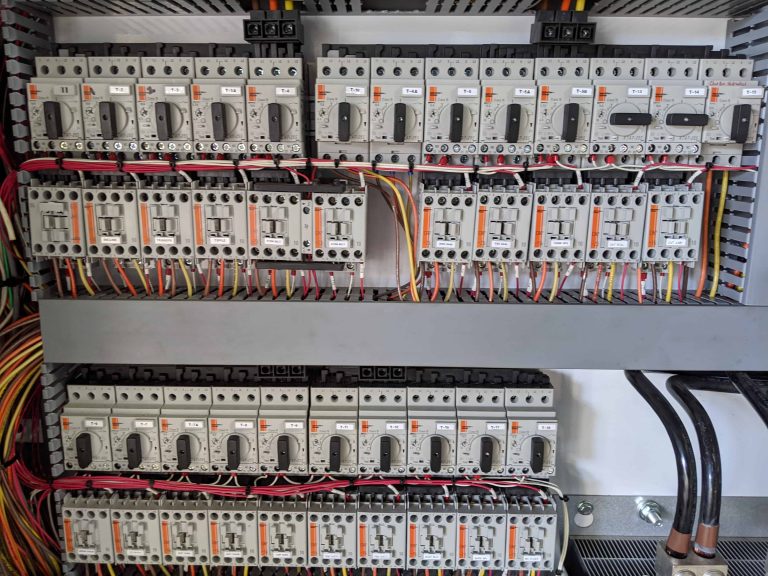
Good workmanship is crucial when ordering new custom control panels for your PLCs. It is not just a matter of aesthetics. Good workmanship allows for better operation on the worksite too.
Ask yourself these questions. Are all of the wires neatly bundled? Is there adequate ventilation? Are all of the components and covers securely anchored?
Good Labeling
Clear labeling will also make it easier to see if the panel complies with your required safety standards. This should list the electrical supply rating, circuit location, short circuit current rating (SCCR), electrical supply source, rated output, fuses, NEMA rating, and any other essential data and metrics.
Internal Layout
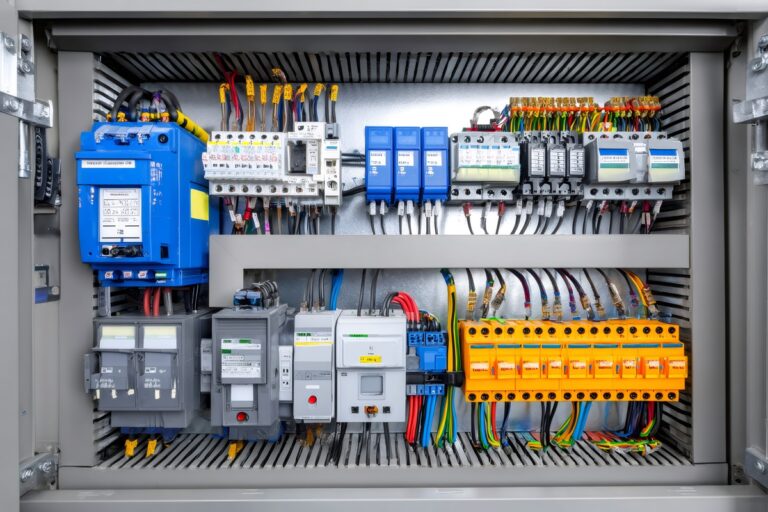
The layout goes hand-in-hand with the workmanship. A good internal layout is vital for smooth operation and ease of use of your custom panel.
Check that power, control, and signal circuits have the minimum separation distance, and that all components are logically grouped.
Has the panel builder complied with the minimum wire-bending radius? If vibration dampeners are needed, have they been included? Above all else, ensure that you take care of your workers’ safety with well-fitting covers that protect them from live circuits.
Conclusion
Ordering new custom control panels doesn’t have to be complicated or confusing. Compile a handy checklist for yourself to simplify your task. If you know what to look for, you’ll also know what to ask for. We will take care of the rest.
Svend Svendsen is the principal owner and a certified electrical engineer at Automation Electric & Controls Inc. Svend has decades of panel building experience specializing in custom industrial control systems, motor control panels, operator consoles, automated control systems, and custom control trailers. Automation Electric and Controls Inc. is a licensed ETL 508A panel building shop.