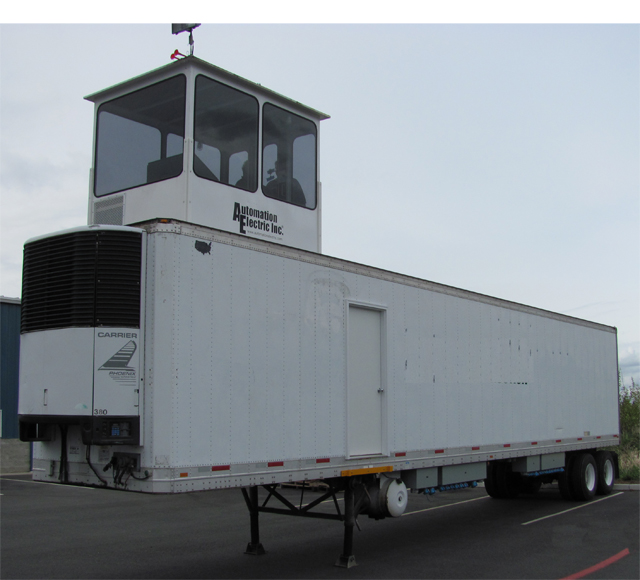
Custom Control Trailers: What Goes Into a Portable Control System
Aggregate producers, sawmill operators, and mobile plants have the same problem. Their operations are often not at a fixed location. The equipment gets set up at one site, runs for weeks or months until the job is done and gets moved to the next site. Every time the plant moves, the electrical and control system moves with it.
Custom control trailers are how most operations handle this. The trailer holds the disconnect, the switchgear, the motor controls, the PLC, and the operator station, all inside one enclosure that can be hauled between sites.
What is a custom control trailer?
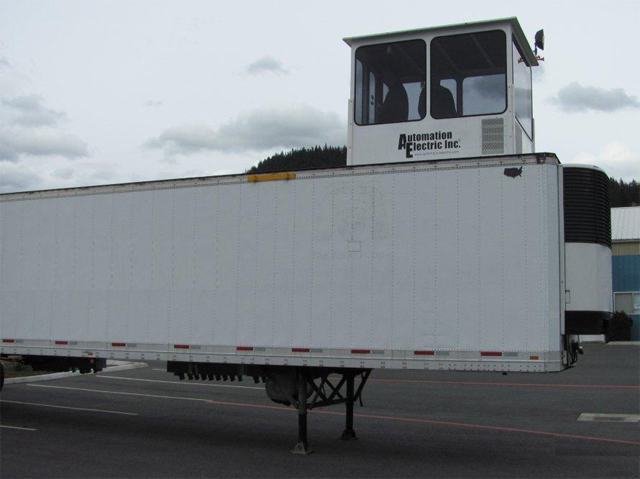
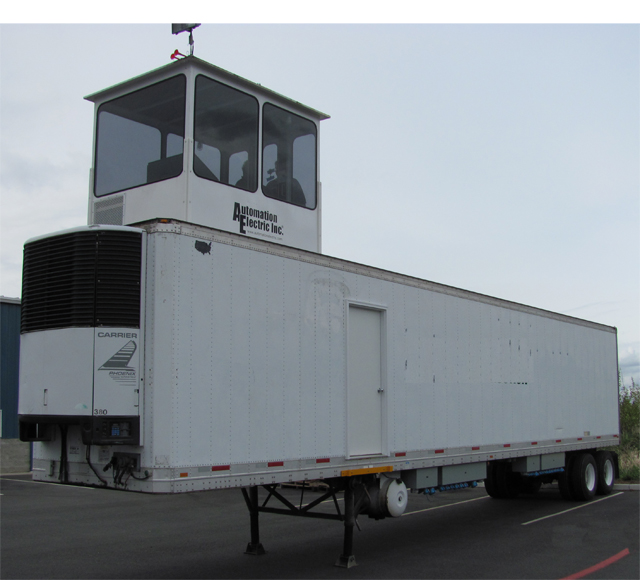
Custom control trailers are an enclosed trailer built to house the electrical distribution, motor controls, and operator interface for a portable industrial plant. It takes the place of a stationary control room or a skid-mounted panel.
The trailer travels between sites. Once parked, it connects to utility power or a generator, ties into the plant equipment through hardwired or wireless links, and gives the operator a control room to run the entire operation.
Which industries use control trailers?
Any operation that moves its plant. A few of the most common:
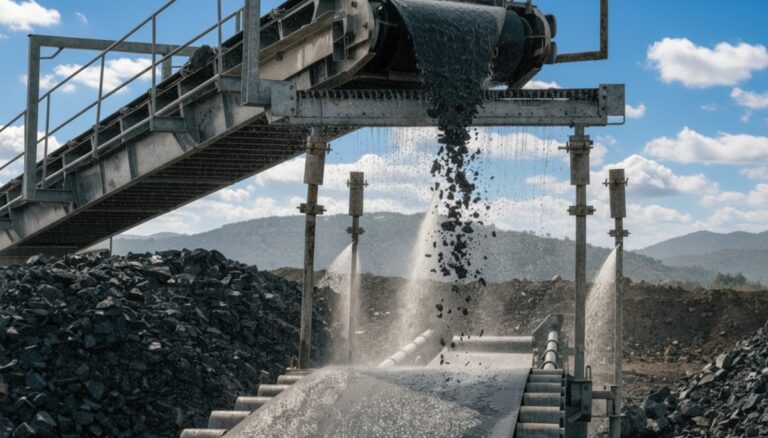
- Aggregate crushing and screening. Portable crushing spreads move from pit to pit and need a single mobile control point for the crusher, feeders, screens, and conveyors.
- Forestry and portable sawmills. Chippers, portable mills, and log yards use trailer-mounted controls to run the equipment at whatever site the wood is coming from.
- Batch plants. Concrete and asphalt batch plants that follow construction projects need a portable control room built to weigh, mix, and dispatch product.
- Remote construction and utility work. Any temporary industrial site where a permanent control building would not make sense.
What is inside a typical control trailer?
A custom control trailer packs the same equipment you would find in a permanent electrical room, but in a smaller footprint and built to move. The main components include:
- Main disconnect and switchgear. The point where utility or generator power enters the trailer and gets distributed.
- Motor control panels or a motor control center. One or more sections containing starters, VFDs, or soft starters for each motor on the plant.
- PLC and HMI. The programmable logic controller runs the automation logic. The HMI on the operator interface shows the operator what is happening.
- Communications. Radios, cellular modems, or fiber for connecting to a home office or SCADA system, plus the wiring that runs from the trailer to the equipment.
- Power distribution. Panelboards and transformers for lighting, receptacles, and control power.
- HVAC. Air conditioning, heating, and often positive-pressure ventilation to keep dust out.
- Operator interface. A workstation with the HMI, radios, cameras, and any manual controls the operator uses to run the plant.
How are trailers designed for vibration, dust, and weather?
Vibration is the first concern. Loose hardware and standard commercial mounting brackets can fail during transport. Panels get bolted with vibration-rated fasteners, cables get bundled and clamped to prevent chafe, and floor-mounted equipment gets tied down against the trailer frame.
Dust is the second concern. Crushing and screening operations generate fine dust that gets into everything. A sealed enclosure with positive-pressure ventilation keeps the dust outside. Filters on the air intake catch what does get pulled in. Sensitive electronics inside individual panels can get an extra layer of protection through conformal coating.
Weather is the third. Trailers sit outside in the sun, the rain, and sometimes the snow. The trailer walls need insulation. The HVAC system needs enough capacity to handle both cooling in summer and heating in winter. Roof loads and snow loads need to be factored into the frame design.
What makes a good operator cab?
A good operator cab gives the operator a clear view of the plant, a comfortable workstation, and the controls they need without the ones they do not.
Visibility comes first. The operator needs to see the feeder, the crusher, and the discharge conveyor at a minimum. Some cabs use large windows and elevated seating. Others use a pop-up cab that raises the operator above the trailer deck for a better sightline.
Climate control keeps the operator productive through a long day. Sound isolation from the plant outside keeps the cab quiet enough to hold a phone call.
What construction details affect the control system?
Frame strength, floor loading, and axle capacity have to handle the weight of the equipment inside. DOT road-legal requirements dictate lighting, tie-down points, brakes, and dimensions.
From the control side, the important details are the ones that affect installation and service. Interior wireways need to be sized for the number of cables terminating in the trailer. Service clearance in front of every panel matters when the operator has to open a door and work on live equipment.
What information does a trailer builder need from the customer?
Useful information includes the equipment list with motor sizes and start methods, the expected power source at typical job sites, the communication needs, the expected environmental conditions, and any transportation constraints on the trailer itself.
The more accurate that picture is at the beginning of the project, the fewer surprises the customer sees at delivery. Trailers built around vague requirements almost always need field modifications after the first job. Trailers built around a clear equipment list and honest site conditions tend to work out of the box.
Working with AEC on a control trailer project
AEC builds custom control trailers for aggregate, forestry, and other portable industrial applications, including rock crusher switchgear trailers and mobile operator cabs. As a licensed UL 508A panel shop, AEC builds the panels inside the trailer to the standard, with the operator interface designed for the equipment the trailer has to run.
If you are evaluating a portable control system for a project, get in touch. Tell us about the plant, the site conditions, and the equipment the trailer has to run, and we will work through what the system needs to be.
Svend Svendsen is the principal owner and a certified electrical engineer at Automation Electric & Controls Inc. Svend has decades of panel building experience specializing in custom industrial control systems, motor control panels, operator consoles, automated control systems, and custom control trailers. Automation Electric and Controls Inc. is a licensed ETL 508A panel building shop.