
Best Practices For Safe And Compliant Industrial Automation
When it comes to safety and compliance, is your workplace up to industry standards? If there is one area where safety and compliance should always be a top priority, it’s the industrial sector. It is essential not only for worker safety but also for workplace efficiency and the production of quality components.
However, in the highly automated industrial environment, safety and compliance is a more complex, multi-disciplinary issue. And to get it right, you must approach it from various angles. Learn how in this concise guide to the best practices for safe and compliant industrial automation.
5 Important Ways To Ensure Safety & Compliance
Here are the five most important ways you can ensure safety and compliance in your business.
Understanding UL508A Certification In Industrial Automation
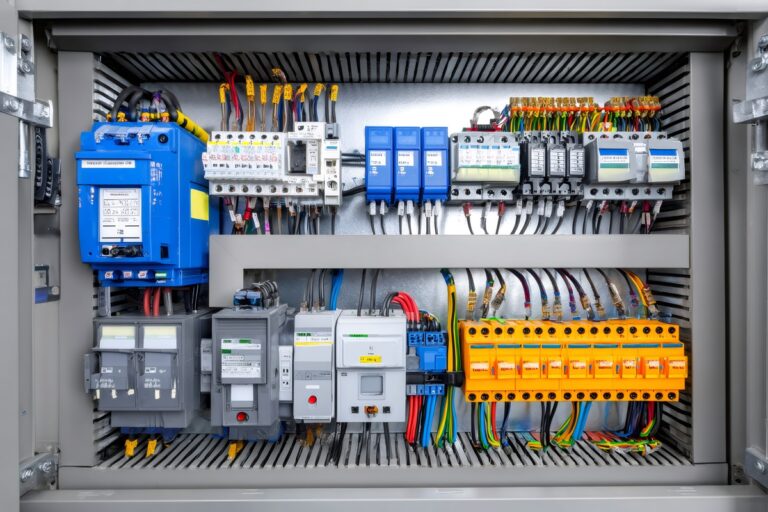
The UL508 certification is the industry standard for control panels operating at or under 1,000V. This certification is issued by the global safety certification company, UL. The UL508A certification is recognized by the National Electrical Code (NEC) in the US and the Canadian Electrical Code (CEC).
The UL508A certification is only issued after testing panels for overcurrent protection, general safety, and reliability. The control panel as a whole, including all individual materials and components, must pass these tests.
Motor drives, switches, contactors, terminal blocks, transformers, and more are checked for compliance with industry safety standards. This is why safety, reliability, and efficiency improve when you choose UL-listed products from a UL508A distributor.
Risk Assessment And Mitigation Strategies
In industrial workplace safety, always go the proactive route rather than the reactive one. Do a risk assessment of all workstations, equipment, and procedures to identify potential problems. By doing this regularly, you will be able to enable better risk mitigation strategies.
Risk detection and analyses are now easier than ever, thanks to modern technology’s analytics and predictive maintenance features. There are even Android apps that help you monitor industrial applications and environments.
Use these technologies, but don’t forego traditional walk-throughs to pinpoint any potential risks on the job.
Compliance Checklists And Standards Adherence
Engage in regular safety and compliance checks. Compliance checklists make it easier to determine if you’re adhering to accep[ted standards. It also quickly highlights areas that need improvement and attention.
The most effective method of checking compliance is with a compliance audit. This is a systematic review of your organization’s adherence to predefined safety benchmarks.
A compliance audit will help you to identify any organizational gaps and mitigate safety risks. The resulting report can then be used as a guide as to where to start solving these problems.
An example is this guideline for PPE compliance audits, from the Occupational Safety and Health Administration (OSHA). Checklists like these make your safety officers and supervisors’ jobs easier. They can use them to determine PPE needs and evaluate workers’ compliance with safety rules.
Employee Training and Safety Protocols
Your workers’ safety is crucial and that means employee safety training is a must. But this type of training is never a once-off task. Consistent refresher training courses will ensure that all employees are up-to-date and informed about recent developments and/or new safety protocols.
Make these training courses and update sessions mandatory. Run regular safety drills. Encourage your workers to ask questions and make relevant suggestions. Embracing employee training and safety protocols is the key to reducing workplace incidents and accidents.
Continuous Monitoring And Adaptation
Don’t just assume that all your employees always follow the training you provide. It may not always translate well into the real-time work environment when your workforce is working to a schedule and under pressure. In addition to continuous training updates, you should continuously monitor your work environment.
Are your workers putting their training to good use? Are any protocols being ignored? Take note of these issues and immediately bring attention to them. If a protocol is not being followed because it is not easy to implement, research whether there is an alternative way of handling the particular hazard.
Adapt your protocols where necessary, and continue to monitor the situation. Be sure to inform every employee of any changes to your safety procedures. That will prevent confusion should an emergency arise.
Conclusion
Safety and compliance are top priorities in industrial automation environments. You need to be committed to continuous training, monitoring, and when necessary adaptation of your safety protocols. But to cover all your bases, insist on control panels that meet the UL508A Certification standard.
Automation Electric & Controls is a licensed ETL 508A panel building shop and a proud supplier of control systems, parts, and components you can rely on. Make the better, safer choice. Trust us with your custom motor control panels, operator consoles, and automated systems. Contact us today for all your industrial automated control needs.
Svend Svendsen is the principal owner and a certified electrical engineer at Automation Electric & Controls Inc. Svend has decades of panel building experience specializing in custom industrial control systems, motor control panels, operator consoles, automated control systems, and custom control trailers. Automation Electric and Controls Inc. is a licensed ETL 508A panel building shop.