
Top 7 Advantages of Industrial Automation
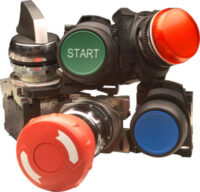
One of the biggest advances in the manufacturing industry was the rise of automation. The use of PACs, PLCs, and robotic equipment has offered many advantages to the manufacturing sector. According to research, more than 30% of businesses have fully automated at least one of their functions.
We all know that industrial automation is the way of the future. But have you ever contemplated all the specific advantages that increased automation on the worksite will offer your company? Let’s examine the top seven advantages of industrial automation, and what they mean for your business.
7 Key Advantages Of Industrial Automation
There are numerous advantages to industrial automation. And some may differ depending on the industrial sector in which you operate. But the seven key advantages below are the top benefits across virtually all industries.
Increased Productivity Rates
With the use of robotics, productivity rates increase dramatically. Human hands cannot assemble components as quickly, and with the degree of accuracy, that robots can. Your workers are limited by the speed with which they can assemble components. That is not an issue with industrial robots.
While the role of foremen and supervisors is not diminished, productivity skyrockets with automated assembly lines. A higher output per day equals faster completion of orders and the ability to take on more projects and bigger orders.
Improved Material Efficiency
Materials cost money. And any waste, no matter how minor, can have major implications down the line.
With the higher precision and minimized errors that automation provides, you can significantly reduce the wastage of raw materials.
Streamlined Data Communication
PLCs can easily and quickly communicate data to other workstations, at a higher degree of accuracy than people. This is made possible by industrial communication protocols like EtherCAT, Ethernet/IP, Fieldbus, PROFIBUS, and CANopen.
You can remotely monitor other machines and control entire workstations via computer-to-computer communication. This instantaneous transfer of data allows for faster data analysis, predictive maintenance, and real-time problem-solving.
Higher Product Quality
You’ll achieve and maintain higher quality with automation – far higher than with manual assembly lines. With constant monitoring and adaptation where necessary, you can reduce the margin for error to the point where it is almost negligible.
This ensures a higher quality of goods produced, and you can easily introduce newer improved designs with just a few programming changes. There’s no learning curve or time spent on re-training assembly-line workers.
More Accurate Data
Industrial automation also increases accuracy through the integration of artificial intelligence (AI) and machine learning (ML).
Data is automatically transferred without the need for human intervention. This prevents administrative errors from creeping into reports.
And thanks to deep-learning algorithms, you can highlight and deal with potential issues very quickly. This is perhaps one of the most important advantages of automation in any industry. Changes that would normally take years to implement through human detection and improved designs are possible sooner.
Enhanced Working Conditions And Safety
The safety of your workers is, and should always be your highest priority. The introduction of automation reduces workplace accidents and improves working conditions for all workers. They are spared the most hazardous, as well as the most tedious, tasks.
Automation reduces the need for workers to be within close proximity of moving machinery that can be dangerous.
In addition, robots can deftly handle materials that are harder to process due to dangerous work conditions. This offers the possibility of reducing your labor costs, health and safety risks, and incident reports. Workers’ skills, experience, and insights can be put to better use elsewhere.
The need for long shifts and overtime will also be drastically reduced. This leads to greater work satisfaction for workers and lower costs for the business. It’s a win-win situation for the workforce and management.
Reduced Running Costs
Let’s be honest, any developments that cut costs have to be considered to stay productive and relevant in the manufacturing industry. All these automation innovations and improvements will save your business money in several ways.
The workforce is your backbone and you rely on their skills and dedication to the job. However, reducing the labor load on your workforce and complementing them with automation cuts costs.
Automation lowers costs in another way too. Fewer errors mean less need for costly repairs, recalls, and downtime. And with fewer claims for workplace injury, your running costs are further reduced.
Conclusion
Automation is not a replacement for manpower, it is a complement to your skilled workforce. With the right automated equipment, your productivity, efficiency, and profits will soar. In addition, you’ll take your business into the future, being able to handle bigger and better projects.
We offer you the best range of automated components and parts and also service them. Contact us with any queries you have about our products and services.
Svend Svendsen is the principal owner and a certified electrical engineer at Automation Electric & Controls Inc. Svend has decades of panel building experience specializing in custom industrial control systems, motor control panels, operator consoles, automated control systems, and custom control trailers. Automation Electric and Controls Inc. is a licensed ETL 508A panel building shop.