
Retrofitting Legacy Equipment for Smart Automation
For many industrial facilities, production still runs on control systems built decades ago. These panels were solid in their time, but they lack the sophistication and capabilities of modern systems and become problematic with age. So, at some point, keeping legacy equipment alive becomes a risk to safety and uptime.
But modernizing your control equipment doesn’t mean starting from scratch. Smart retrofits, modular PLCs, and industrial IoT sensors let plants upgrade stage by stage.
The Challenge Of Legacy Systems
Legacy control systems present multiple operational challenges that only get worse over time. Here are some of the most common problems industrial facilities face:
Obsolete Components
Aging control panels installed decades ago often rely on obsolete components that no longer have supplier support. This creates vulnerability in maintenance and repair scenarios.
When a critical relay or controller fails, finding replacement parts is difficult and expensive, sometimes requiring custom fabrication or scavenging decommissioned equipment.
Silod Data
Traditional hardwired control systems operate in isolation, which makes it nearly impossible to collect real-time production data, monitor equipment health, or integrate with modern enterprise systems.
This data gap prevents manufacturers from implementing predictive maintenance strategies or optimizing processes based on performance analytics.
Poor Energy Efficiency
Energy efficiency is another big concern. Equipment designed in previous decades operates without the power management and variable-speed control capabilities of modern systems.
Safety and Compliance Issues
Safety and compliance issues also emerge as control systems age. Current electrical codes and safety standards have evolved, and legacy systems may not meet modern requirements.
Modern Solutions: PLC Upgrades And IoT Sensors
Industrial retrofit projects leverage several technologies to bridge the gap between old machinery and modern automation standards.
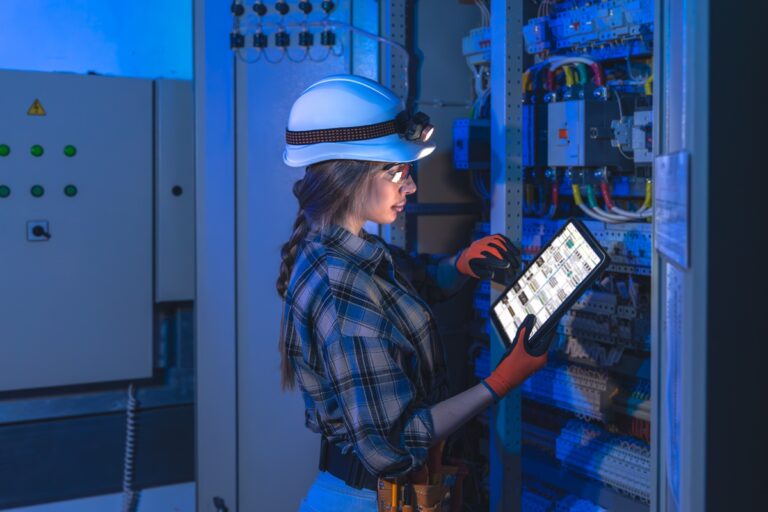
Programmable Logic Controllers (PLCs) are the starting point for most upgrading control panels initiatives. They replace relay-based logic with flexible, programmable control platforms that can be modified without rewiring.
Modern PLCs offer substantial advantages over legacy systems:
- Faster processing speeds
- Greater memory capacity for complex programs
- Built-in communication protocols that enable networking with other devices.
Compact PLC models can also often fit within existing control panel enclosures, which minimizes the physical footprint of upgrades.
IoT sensors add another layer of intelligence to legacy equipment modernization.
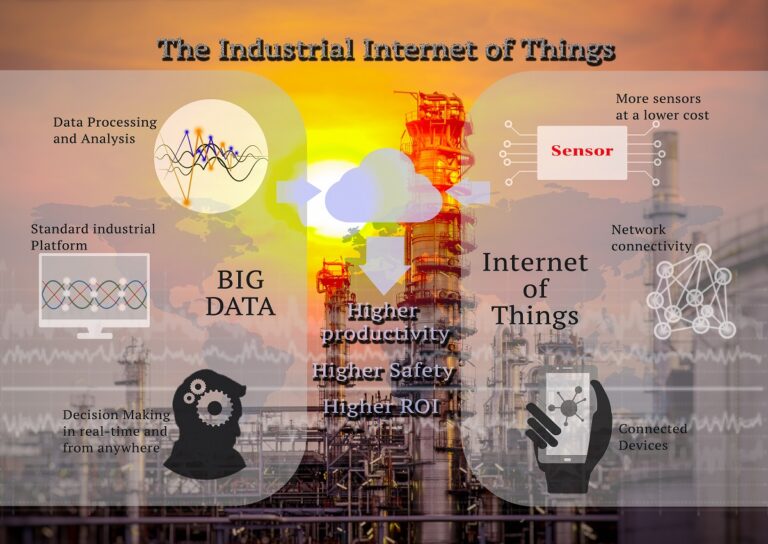
Wireless temperature, vibration, pressure, and flow sensors can be retrofitted onto existing machinery in order to provide real-time monitoring capabilities. These sensors transmit data to cloud platforms or local servers, enabling condition-based monitoring and predictive maintenance programs.
Variable Frequency Drives (VFDs) are also a critical component for modernization – particularly for motor-driven equipment.
Retrofitting VFDs onto older motors enables precise speed control, reduces energy consumption, and extends equipment lifespan by eliminating hard starts and mechanical stress. The International Energy Agency reports that motor system optimization, including VFD installation, is one of the most cost-effective energy efficiency measures available to industry.
Interfacing Old And New
Few plants can rip and replace every panel at once. Bridging technologies keep legacy equipment productive while smart devices come online in phases so that your uptime stays protected. Here’s how it works:
Protocol Converters and Gateways
Protocol converters serve as translators. They enable legacy PLC integration by converting between older industrial protocols (like Modbus RTU, DeviceNet) or proprietary systems and modern standards such as Ethernet/IP, Profinet, or OPC UA.
These devices maintain operational continuity while enabling data exchange across the automation architecture.
SCADA
SCADA (Supervisory Control and Data Acquisition) integration brings centralized monitoring and control to previously isolated equipment.
Modern SCADA platforms can communicate with diverse devices through protocol libraries and drivers. This creates unified interfaces for operators who previously managed multiple disconnected systems.
Web-based SCADA solutions offer additional flexibility with remote access and mobile monitoring capabilities.
Ensuring Cybersecurity in Mixed Environments
Network infrastructure requires careful consideration during industrial retrofit projects.
Legacy equipment wasn’t designed with cybersecurity threats in mind, so implementing network segmentation, firewalls, and secure remote access protocols is essential.
The National Institute of Standards and Technology (NIST) provides frameworks for securing industrial control systems that should guide retrofit projects.
Case Example: Upgrading A Legacy Line In A Processing Facility
Sugar Creek Brewing Company in Charlotte, North Carolina, faced a costly problem: their aging bottling line was losing over $30,000 monthly in beer spillage due to pressure and temperature imbalances that caused excessive foaming and inconsistent fills.
Rather than replacing the entire line, the brewery retrofitted its existing equipment with modern capabilities.
They installed IoT sensors, precision flow meters, and an IIoT Gateway on beer tanks to monitor fill levels and temperature in real-time.
The results were dramatic. Analytics identified the root cause of excessive foaming, enabling targeted corrections that reduced waste. This led to savings of $120,000 in one year (2019).
The Sugar Creek case demonstrates that equipment modernization delivers fast ROI while improving product quality and operational insights without the disruption of complete replacement.
Conclusion
Retrofitting legacy control systems isn’t just about swapping parts. It’s about securing your plant’s future. A good modernization plan reduces downtime, improves safety, and prepares your operation for evolving industry standards.
Every facility faces its own combination of age, environment, and production pressure. Working with an experienced partner can make the difference between piecemeal fixes and a smooth, phased upgrade that keeps uptime intact.
Automation Electric and Controls delivers custom panel design, fabrication, and inspection services that meet code and production demands.
Whether you need a single retrofit or a full plant strategy, our team is ready to help you move from reactive maintenance to reliable performance. Get in touch today.
Svend Svendsen is the principal owner and a certified electrical engineer at Automation Electric & Controls Inc. Svend has decades of panel building experience specializing in custom industrial control systems, motor control panels, operator consoles, automated control systems, and custom control trailers. Automation Electric and Controls Inc. is a licensed ETL 508A panel building shop.