
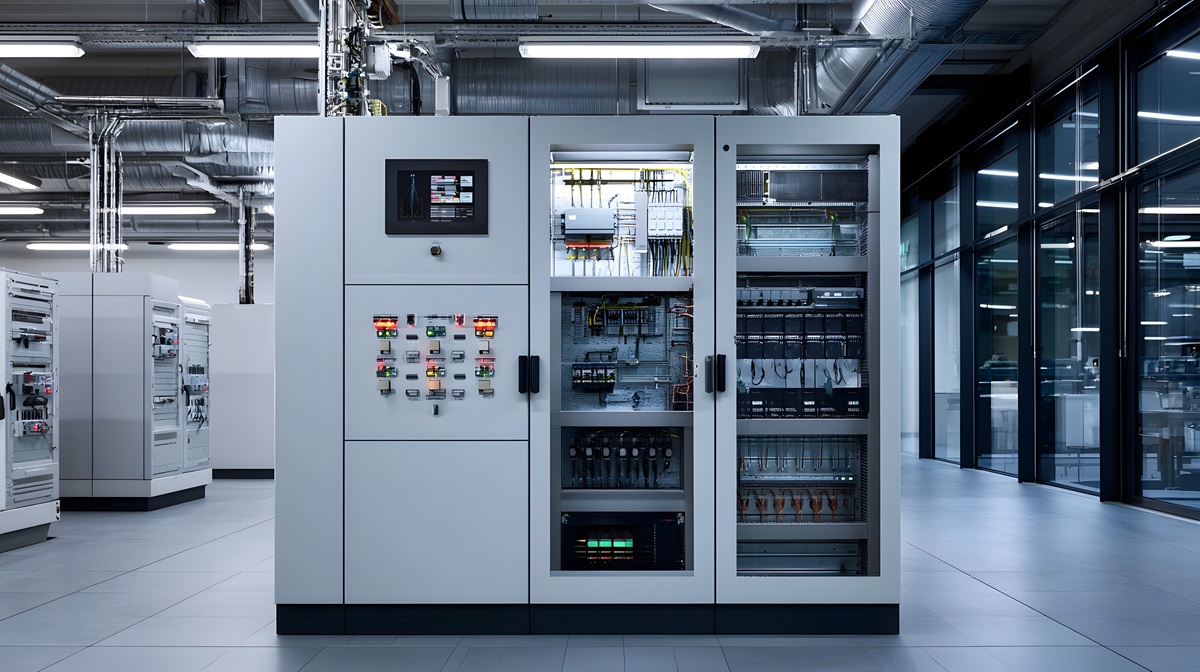
Common Control Panel Project Mistakes and How to Avoid Them
A motor size changes after the panel layout is approved. A replacement VFD is selected because the original unit is unavailable. An Ethernet connection is shown on the drawings, but no one has defined who supplies the switch or assigns the network addresses.
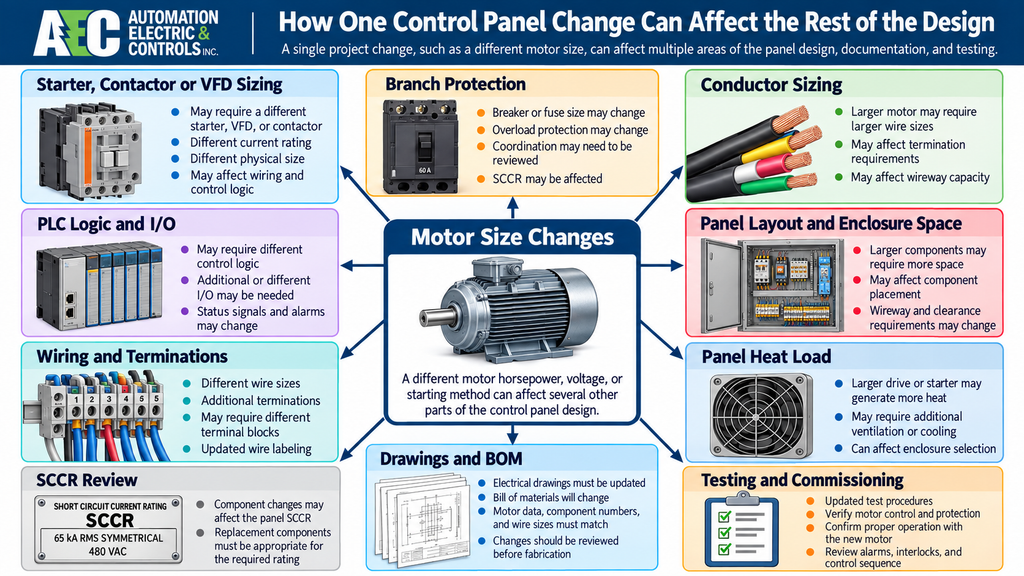
Inside an industrial control panel project, each one can affect several other parts of the design. A motor change can affect the starter or drive, branch protection, conductor sizing, enclosure heat, and available space. A component substitution can change wiring, programming, physical dimensions, or short-circuit ratings.
Many of these problems can be avoided by resolving design decisions early and keeping the engineering, fabrication, testing, and documentation aligned as the project changes.
Releasing the Panel Before the Equipment Data Is Final
A control panel can only be designed around the information provided to the panel builder.
Motor horsepower, voltage, starting method, field-device signal types, control voltage, environmental requirements, and connected equipment all affect the design. If those values are still changing, parts of the panel design may also need to change.
A late motor horsepower change is a good example. It may require a different contactor, overload device, soft starter, or VFD. The associated branch circuit may need to be reviewed. A larger drive may also occupy more enclosure space or produce a different heat load.
The best way to avoid this problem is not to wait until every minor project detail is frozen. It is to identify which information materially affects panel construction and keep those items current.
AEC’s Custom Control Panel Checklist identifies the basic information a panel builder needs, including incoming voltage, drawings, programming requirements, preferred components, and customer-supplied equipment.
Treating Shop Drawing Approval as a Paperwork Step
Shop drawings are one of the last opportunities to find design problems before fabrication turns them into physical problems.
The review should go beyond checking titles, dimensions, and catalog numbers.
Follow the power path. Review the motor loads and starting methods. Compare the bill of materials against the schematic. Look at terminal access, network equipment, and operator devices.
AEC’s Reviewing Control Panel Shop Drawings Before Production Begins goes through that process in detail.
One of the easiest mistakes to make is reviewing each drawing separately. The schematic may make sense by itself while the panel layout shows a component that is difficult to access.
Making Component Substitutions Without Reviewing the Complete Design
Industrial components are not interchangeable simply because their basic voltage and current ratings are similar.
A substitute breaker, power supply, VFD, or terminal block may have different dimensions, wiring requirements, software requirements, or installation instructions.
AEC’s Standard vs. Customer-Specified Control Panel Components explains why component selection also affects plant standards, spare parts, technician familiarity, programming tools, and future support.
How Does Power Distribution Affect Fault Isolation?
A panel needs to distribute power safely, but it should also be possible to understand which part of the system lost power when a fault occurs.
Incoming power, branch protection, motor circuits, drives, control transformers, DC power supplies, and field circuits should form an electrical architecture that technicians can follow in both the drawings and the enclosure.
AEC’s Power Distribution Inside an Industrial Control Panel covers how those circuits relate to one another.
Poor organization can make a simple failure harder to isolate. If several unrelated loads are difficult to distinguish from one another, maintenance may spend additional time determining where the problem begins.
Good power distribution does not eliminate faults. It makes troubleshooting easier when one occurs.
What Communication Requirements Should Be Defined Before Startup?
The project team should know which devices communicate, what protocols are required, where network responsibility changes between vendors, and who controls addressing and connection to plant infrastructure.
AEC’s Industrial Network Switch Strategy for PLC Systems addresses switch selection, topology, segmentation, and network diagnostics.
Software information belongs in the same discussion. PLC programs, HMI applications, drive parameters, network configurations, and firmware records should be available to the people expected to support the equipment.
AEC’s Automation Firmware Management Strategy for Industrial Plants explains why firmware and software compatibility becomes particularly important when hardware needs to be replaced.
These questions are much easier to resolve before startup.
Why Should Field Changes Be Documented?
It is normal to see industrial equipment changes after installation.
The problem is when the system and the documentation describe two different machines.
A field technician may move a wire, replace a device, add a relay, or change a drive configuration to solve a legitimate problem. If the drawings and software records are not updated, the next technician is troubleshooting from inaccurate information.
AEC’s Control Panel Commissioning Checklist for Startup and System Handoff identifies those records as part of completing the project, not as optional paperwork after startup.
What Should Be Resolved Before Factory Acceptance Testing?
Factory Acceptance Testing may uncover problems. This should not be the first time the project team reviews whether the completed design matches the intended system.
By the time FAT begins, major decisions about power distribution, components, panel layout, I/O, communications, and control sequence should already have been reviewed.
AEC’s Factory Acceptance Testing for Industrial Control Panels covers visual inspection, electrical verification, PLC and HMI testing, simulated field devices, communications, documentation, and customer witness testing. FAT and field commissioning also serve different purposes. FAT verifies the panel in the shop. Commissioning verifies the installed system with its field wiring, equipment, devices, and actual process conditions
Resolve Changes Where They Are Cheapest to Make
Most control panel project mistakes become expensive because they are discovered after the decision has already turned into hardware, wiring, programming, or field work.
AEC’s Design-Build Approach to Custom Industrial Control Panels keeps engineering and fabrication connected so design changes can be evaluated against the actual panel being built.
When something changes ask what else in the panel depends on the thing that changed.
Related Engineering Resources
Custom Control Panel Checklist
Reviewing Control Panel Shop Drawings Before Production Begins
Standard vs. Customer-Specified Control Panel Components
Power Distribution Inside an Industrial Control Panel
Understanding Short Circuit Current Rating (SCCR) on Industrial Control Panels
Industrial Network Switch Strategy for PLC Systems
Automation Firmware Management Strategy for Industrial Plants
Svend Svendsen is the principal owner and a certified electrical engineer at Automation Electric & Controls Inc. Svend has decades of panel building experience specializing in custom industrial control systems, motor control panels, operator consoles, automated control systems, and custom control trailers. Automation Electric and Controls Inc. is a licensed ETL 508A panel building shop.