
Sustainable Automation: Reducing Energy Use and Waste with Smart Controls
Sustainability is no longer just a discussion point. It’s an operational priority. Industrial facilities are expected to deliver efficiency while reducing environmental impact, all without slowing production.
Automation makes this balance possible. With smarter systems, plants can cut waste and optimize performance at the same time. From energy use to raw material consumption, automated controls give businesses the ability to run leaner and greener.
In this article, we’ll look at how automation supports sustainability goals and reduces energy use across industries. We’ll also highlight how modern control panels and advanced monitoring tools help companies track progress and meet growing demands for environmental responsibility.
Automation’s Role in Sustainability
Industrial automation gives companies precise control over energy and resources. When systems operate on exact requirements rather than estimated loads, it results in less waste.
Machines run only as much as needed, meaning idle energy consumption is reduced. This cuts unnecessary usage without affecting production levels.
Automation also improves how raw materials are used. With measurements fed directly into control systems, overproduction drops. That means fewer rejected batches, less scrap, and streamlined production cycles.
When quality stays consistent, resources last longer and overall environmental impact decreases.
Lastly, data insights play a major role here. Automated systems collect real-time data, which you can analyze to pinpoint inefficiencies. For example, a facility may notice motors drawing too much power during peak hours and adjust scheduling accordingly. Over time, these operational shifts compound into real, measurable savings.
Energy-Efficient Control Panels and Systems
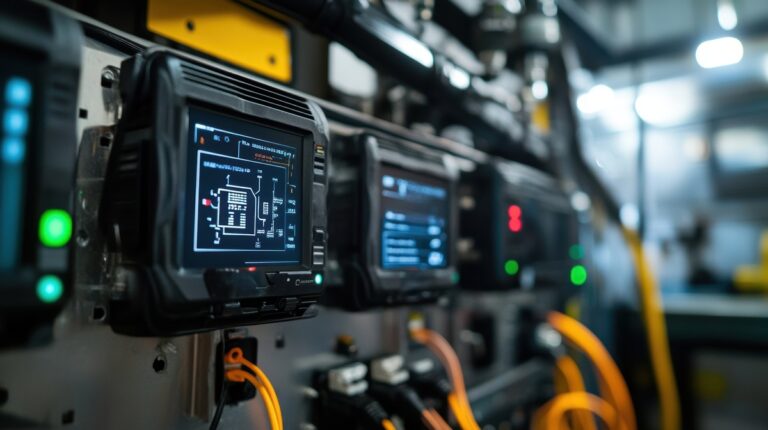
Sustainable industrial automation relies on technology that directly addresses energy use. Control panels and supporting systems make the difference between a facility consuming excess power and one operating efficiently. Each piece of hardware has a role in improving performance.
Variable frequency drives (VFDs) lower energy use by adjusting motor speed to match demand instead of running motors at full capacity. This is especially effective in settings like pumps and conveyors. Even a small adjustment in speed reduces electricity draw over long operating hours.
Smart sensors provide another layer of efficiency. These track performance in real time by measuring temperature, vibration, or load. Plants can prevent breakdowns and avoid the wasted power of machinery that operates incorrectly by catching equipment issues early.
Load management systems help distribute power evenly across processes. They prevent overload conditions and balance demand. Facilities with several high-energy assets running at once benefit most, as the system prevents expensive peaks in consumption.
Green Manufacturing Case Studies
Real-world implementation shows how automation delivers tangible sustainability results. Various sectors can achieve significant reductions in both resource consumption and operating costs through strategic automation investments.
Circular Thermal Heat Recovery Systems in Food Processing
Food processing plants implementing circular thermal systems with high-temperature heat pumps can achieve up to 80% total carbon reduction.
These systems recover low-grade heat from cooling processes and upgrade it to high-grade heat for plant operations. The heat pumps produce 2-3 times more heat output than they consume in electricity, making them highly efficient for upgrading waste energy.
In food manufacturing, between 50 and 80% of primary energy input typically leaves plants as waste heat through hot exhaust gases and radiating equipment. By capturing and rerouting this waste heat back into production processes, plants reduce both energy needs and CO2 emissions.
Finnish Sawmill Industry Automation & Electrification
The Finnish sawmill industry reduced total emissions by 23% between 2019 and 2023, with emissions inside sawmill facilities dropping by 39%. This was achieved through:
- increased use of frequency converters and more efficient motors in production processes
- improved heat recovery systems
- renovated drying plants
- abandonment of fossil fuels in heat production
The industry projects that with the continued electrification of work machines, enhanced energy efficiency, and elimination of fossil fuels in heat production, emission reductions within sawmill operations could reach 79% by 2035 compared to 2020 levels.
Meeting ESG Goals Through Automation
Companies adopting automation support wider environmental, social, and governance (ESG) objectives at the same time.
There are strict emission standards in the United States, and automated tracking ensures facilities stay compliant by recording metrics in real time rather than relying on manual reporting.
Smart control panels can generate reports directly from equipment data. This makes audits easier and helps managers prove measurable reductions in energy consumption. It also improves transparency for investors and regulators.
Automation also directly connects to stakeholder expectations. Businesses are under pressure to show they are cutting carbon output and minimizing waste. Automated systems give them the proof they need while also unlocking practical operational savings.
As ESG policies expand, automated solutions will continue to support compliance while driving resource efficiency.
Conclusion
Across industries, sustainability and efficiency no longer compete with one another. Automation makes it practical to achieve both. By controlling energy use, reducing material waste, and offering accurate data for compliance, automated systems give facilities the tools to meet today’s expectations.
The path forward relies on investing in reliable, energy-efficient control panels and tailored automation strategies. These not only cut costs but also prove measurable progress toward environmental goals.
If your facility is ready to reduce overhead while meeting strict ESG standards, Automation Electric and Controls can help. With custom-built industrial control panels and expert inspection services, we make sure systems align with both operational needs and electrical code compliance. Contact us today to learn how we can support your next step toward sustainable operations.
Svend Svendsen is the principal owner and a certified electrical engineer at Automation Electric & Controls Inc. Svend has decades of panel building experience specializing in custom industrial control systems, motor control panels, operator consoles, automated control systems, and custom control trailers. Automation Electric and Controls Inc. is a licensed ETL 508A panel building shop.