What Is a UL 508A Panel Shop and Why It Matters for Your Project
Should the panel be UL listed? Does the buyer require a UL 508A label? What does the inspector want to see when the panel arrives at the job site? These are reasonable questions, and the answers come down to one thing. The shop that built the panel needs to be a UL 508A panel shop, and the panel needs to carry the proper label.
At Automation Electric and Controls, we have been a licensed UL 508A panel shop since the early days of our business. We know the standard inside and out, and we build every panel that leaves our shop with the requirements of UL 508A in mind. This article walks through what a UL 508A panel shop actually is, what the standard covers, and why working with a licensed shop protects your project from the moment the panel ships to the day it gets inspected on site.
What UL 508A Actually Means
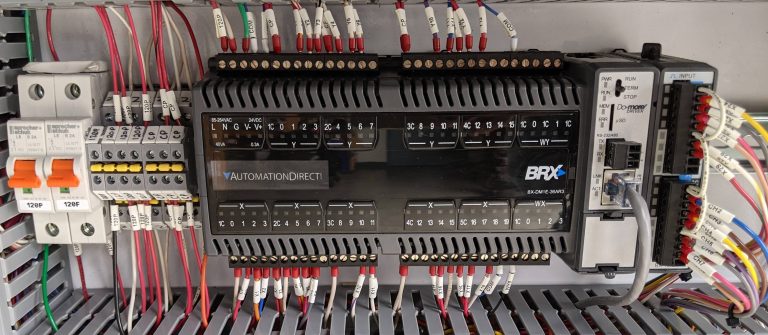
UL 508A is the standard published by Underwriters Laboratories that covers the construction of industrial control panels. The standard sets the rules for how panels are built, what components are allowed inside them, how those components are wired, how short circuit current ratings are calculated, and how the finished panel is labeled. It is the document that an authority having jurisdiction, often a building or electrical inspector, will reference when deciding whether your panel is acceptable for installation.
The standard exists because industrial control panels can fail in dangerous ways if they are built poorly. A panel that draws more current than its components can handle is a fire hazard. A panel with the wrong wire sizing can melt insulation under load. A panel without proper short circuit protection can explode during a fault event. UL 508A puts engineering rules around all of these scenarios so that panels built to the standard behave predictably and safely.
What a UL 508A Panel Shop Is Authorized to Do
A UL 508A panel shop is a facility that has been audited and licensed by Underwriters Laboratories to build panels under the UL 508A standard and apply the UL listing label to those panels. Becoming a licensed shop UL inspectors visit the shop on a regular basis, review records, examine recent builds, and verify that the shop is following the procedures it claims to follow.
Because the shop has been audited, the shop is allowed to apply the UL label to panels at the time of construction without sending the finished panel out for individual inspection. The shop is also allowed to perform short circuit current rating calculations using the methods described in Supplement SB of the UL 508A standard. Without the license, the panel either gets shipped without a label or gets sent to UL for inspection on a one-off basis, which costs more and adds weeks to the project schedule.
Why the Label on the Panel Matters
The UL label is a record that the panel was built by a licensed shop, that the shop documented the short circuit current rating, and that the components inside the panel are recognized for use in a UL 508A panel. When the panel arrives at a job site and the electrical inspector opens the door, the label is the first thing that gets looked at.
Without the label, the inspector has no way to verify any of the engineering that went into the panel. In many jurisdictions, that means the panel cannot be energized until it gets evaluated, often by a third party at the owner’s expense. We have seen projects sit idle for weeks because a non-listed panel showed up and the inspector refused to sign off. The label removes that risk entirely.
Short Circuit Current Rating and Why You Should Care
Every UL 508A panel must have a short circuit current rating, often abbreviated SCCR. The SCCR tells you how much fault current the panel can withstand without coming apart. If the available fault current at the point of installation is higher than the panel’s SCCR, the panel is not allowed to be installed there.
A licensed shop calculates the SCCR for every panel using the rules in Supplement SB of UL 508A. The number gets recorded on the label so that the installer and the inspector both know what the panel is rated for. If you take a panel off the shelf without an SCCR, you are gambling that the fault current at the install site is low enough not to cause a problem. That is not a gamble worth taking on a piece of equipment that may run for twenty years.
Component Selection Inside a Listed Panel
Not every component on the market is recognized for use in a UL 508A panel. UL maintains a list of recognized components for industrial control panels, often referred to in the trade as the white book. A licensed shop knows how to navigate that list and how to select components that work together within the rules of the standard.
This matters more than people realize. We have seen panels built by unlicensed shops where the breakers, contactors, and overload relays were technically functional but were not a recognized combination under UL 508A. When the customer tried to get the panel labeled later, the components had to be ripped out and replaced. A licensed shop avoids that situation by selecting compatible components from the start.
Quality Control That Comes With the License
Holding a UL 508A license requires the shop to maintain documented procedures for receiving components, building panels, testing finished assemblies, and labeling the work. The procedures are reviewed during each UL audit. If the shop falls out of compliance, the license is at risk.
The result is a level of process discipline that you do not always find in shops that build to less rigorous standards. Every panel that leaves our shop has been wired against drawings, tested under power, and inspected before it ships. The drawings, the bill of materials, and the test records all stay on file. If a question comes up two years after the panel is in service, we can pull the records and tell you exactly how the panel was built.
The Cost Argument Failure
Some buyers look at a labeled panel from a licensed shop and a non-labeled panel from a competitor and ask why they should pay more for the label. The honest answer is that on the day the panel ships, the non-labeled panel is cheaper. Every other day after that, the labeled panel is the better deal.
The non-labeled panel is at risk of being rejected at inspection, at risk of needing field modifications to satisfy the inspector, and at risk of voiding insurance coverage if a fault event occurs. Any one of those outcomes wipes out the upfront savings. The labeled panel ships with the engineering work already done, the documentation already complete, and the inspection already passed in principle. That is what you are paying for.
Working With Automation Electric and Controls
We have been building UL 508A panels for projects across the United States and around the world since 2003. Motor control panels, custom control panels, operator consoles, control trailers, and switchgear assemblies all leave our shop with the proper label and documentation.
If you have a project on the table and you want to know whether the panel needs to be UL 508A listed, give us a call. We will walk you through the requirements for your installation and help you decide what the right answer looks like.
The label on the door is a small thing. The work behind it is not. If you are going to put a control panel into service, put one in that has been built right.
Svend Svendsen is the principal owner and a certified electrical engineer at Automation Electric & Controls Inc. Svend has decades of panel building experience specializing in custom industrial control systems, motor control panels, operator consoles, automated control systems, and custom control trailers. Automation Electric and Controls Inc. is a licensed ETL 508A panel building shop.