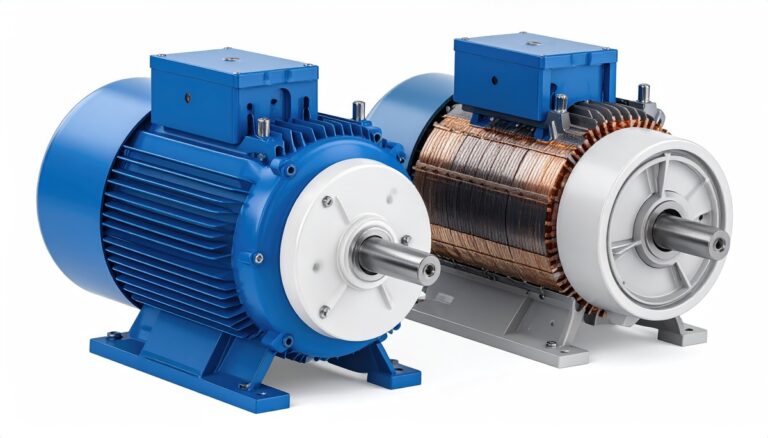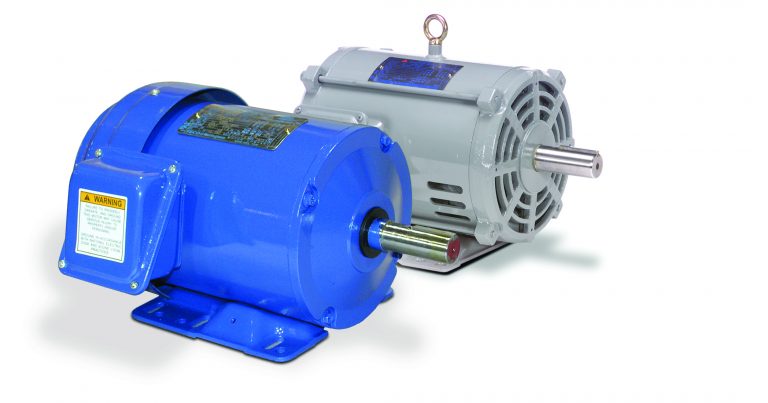

What Is A Helical Gear Reducer Motor?

The industrial sector has a wide and exciting range of machinery and components, all essential to your everyday needs on-site. However, the terminology for all the bits and pieces can get confusing.
One of the terms you may have come across but not fully understood is the ‘helical gear reducer motor’. What exactly is a helical gear reducer motor? More importantly, how does it work, and why do you need it?
We look at the answers to these questions and examine other types of speed-reducing gears in the guide below.
How Gears Work
Before we look at the helical gear reducer motor, here is a brief explanation of how helical gears work versus other gears.
We all understand the basic concept of gears (or cogs) and their use. A gear is a rotating circular machine part, usually mounted on a shaft, with specially designed ‘teeth’ that mesh with another ‘toothed’ part.
Geared devices can alter the speed, torque, and direction of a power source, as they turn. While the teeth on two meshing gears are the same shape, the individual gear diameters affect speed and torque.
How Helical Gears Work
Helical gears have the same basic tooth form as spur gears but are cut at an angle to the rotation of the gear blank, known as the helix angle (usually between 15 and 30 degrees). They decrease speed and increase torque between rotating shafts.
Helical gears transfer loads more smoothly than spur gears, resulting in greater load capacity, higher speed capability, and quieter operation.
They can be further divided into two categories: Those that transfer power between parallel shafts and those that transfer power between non-parallel shafts.
So What Is A Helical Gear Reducer Motor?
Now that we’ve covered what a helical gear is, what is a helical gear reducer motor?
It’s a single helical gear design gearbox, which reduces speed (revolutions per minute/RPM) and increases torque. This enables you to control the speed at which a motor runs.
How Does A Helical Gear Reducer Motor Work?
Essentially, a helical gear reducer motor reduces speed while increasing torque through gear ratios.
The basic measurements of circles play a role in gear ratios. These measurements include diameter (the measurement straight across the center of a circle) and circumference (the measurement along the outside lines of a circle).
Gear ratio involves how varying sizes of gears, wheels, chains, and belts interact when transferring energy. And all of these components can be seen as types of ‘circles’.
Why Are Speed And Torque Important In Industrial Applications?
There are two vital reasons why you may need helical gear reducer motors to adapt speed and torque on site:
- The industrial robotics market is growing, but some motors operating speeds may be too fast for some precision robotics. Reducing RPMs can solve this problem.
- Some systems also require variable speed-to-torque ratios, with more speed and less power needed at certain intervals and the reverse at other times. Speed-to-torque ratio selection addresses this need.
Other Types Of Speed Reducers
There are many different types of motors on the market, with different gearing. It’s important to choose the correct electric motor for your specific project for the best results.
Below are the three most common speed-reducing gears.
Spur Gears
Also known as straight-cut gears, spur gears are the simplest and most common speed reducers. Their straight teeth are aligned parallel to the gear shaft.
They don’t slip during operation and are a reliable method of increasing or decreasing shaft speed, even at high velocity. Spur gears are therefore also exceptionally durable.
Worm Gears
A staggered-shaft gear, or worm gear, creates motion between the shafts using threads cut into a cylindrical bar. This ‘worm’ has threads that mesh with the circular gear or ‘worm wheel’, which is similar in appearance to a spur gear.
This interaction between the number of worm threads and the number of teeth on the worm reduces the speed. It is also sometimes referred to as a worm drive.
Bevel Gears
In bevel gears, the axes of shafts intersect, and the toothed faces of these gears have a distinctly conical shape. Bevel gears work other gears at an angle to them through bevel wheels that run along the teeth.
Bevel gears are usually mounted on 90-degree shafts, and have unique advantages. They transfer energy or power between intersecting shafts. They do so, whether perpendicular or at an angle.
This changes the axis of rotation of the shaft. Bevel gears can change operating angles and are useful in construction equipment.
Conclusion
There you have it. A helical gear reducer motor works to control the speed of a motor or machine. For advice about electric motors, or the supply of other parts for your specific industry, give us a call today.
Svend Svendsen is the principal owner and a certified electrical engineer at Automation Electric & Controls Inc. Svend has decades of panel building experience specializing in custom industrial control systems, motor control panels, operator consoles, automated control systems, and custom control trailers. Automation Electric and Controls Inc. is a licensed ETL 508A panel building shop.